Wednesday, November 9, 2016

Peanuts

Peanuts:

About:

  The peanut (Arachis hypogaea), also known as "ground nut" and "goober", is a crop of global importance.  It is widely grown in the tropics and subtropics being important to both smallholder and large commercial producers.  It is classified as both a grain legume and , because of its high oil content, an oil crop.  
Peanut pods develop under the ground which is very unusual among crop plants.  
Peanuts are similar in taste and nutritional profile to tree nuts such as walnuts and almonds.  The botanical definition of a "nut" is a  fruit whose ovary wall becomes very hard at maturity.  Using this criteria the peanut is not a nut but rather a legume.  There are literally thousands of peanut varieties.  The four most popular major groups are: Spanish, Runner, Virginia, and Valencia. 


History:

The oldest known archaeological remains of pods have been dated at about 7600 years old.  They were found in Peru.  Cultivation of peanuts was well established in Mesoamerica well before the Spanish arrived.  The peanut was spread worldwide by European traders, and cultivation is now widespread in tropical and subtropical regions.  In the English-speaking world is most important in the U.S. .  Although it was mainly a garden crop for much of the colonial period, it was mostly used as animal feed until the 1930's.  The U.S. Dept. of Agriculture initiated a program to encourage agricultural production and human consumption of peanuts in the late 19th and early 20th centuries.  George Washington Carver developed hundreds of recipes for peanuts during his tenure in the program. 

Peanuts as Food:

Peanuts are processed into butter, oil, flour, and flakes.   Peanut oil has a mild flavor and a relatively high smoke point.  Peanut oil is monounsaturated and resistant to rancidity.
Peanut flour is lower in fat than peanut butter.  It is high in protein and gluten free. 
Boiled peanuts are a popular snack in the Southern U.S.  as well as India, China, and West Africa.  In the U. S. south boiled are often prepared in briny water.
Dry roast4ed peanuts can be roasted in the shell or shelled in a home oven spread one layer deep and baked at 350 degrees for 15 - 20 minutes for shelled, or 20 - 25 minutes in shell. 
In the U.S. peanuts and peanut butter are the most popular nut choice and comprise 67% of all nut consumption.

Nutrition:

Peanuts are a very good source of copper, and a good source of manganese, vitamin B3, folate, biotin, vitamin E , phosphorus, vitamin B1 and protein. 

Health Benefits:

Peanuts are rich in monounsaturated fats, which help reduce the risk of cardiovascular disease.  Peanuts contain the same healthful fat found in olive oil and are also rich in antioxidants found in many fruits.  Peanuts contain reservatrol, a flavonoid studied in red grapes and red wine which improves blood flow to the brain by as much as 30% reducing the risk of stroke./  
The nutrients found in peanuts include folic acid,  phytosterols, phytic acid, and reservatrol which may have anti-cancer effects.  A 20 year study that collected data on over 80,000 women showed that women who eat at least 1 ounce of nuts, peanuts, or peanut butter each week have a 25% lower risk of developing gall stones.  Research published in the Journal of Neurology, Neurosurgery, and Psychiatry indicates regular consumption of niacin rich foods like peanuts provides protection against Alzheimer's disease and age related cognitive decline.  In another 28 month study 8865 adult men and women in Spain found participants who ate nuts at least 2x's per week were less likely to gain weight than participants who never or almost never eat nuts.  

Selecting and Storing:

Shelled peanuts are available in prepackaged containers and bulk bins.  In bins they should be covered and have a good turnover.  Make sure there is no evidence of moisture or insect damage. 
Whole peanuts in shell are usually available in bags or bins,.  If possible shake to determine if they are heavy for their size and do not rattle, a sign they have dried out.  These should be free from cracks, dark spots, and insect damage.
Shelled peanuts should be kept in a tightly sealed container in the refrigerator for up to 3 months, or 6 months in the freezer.  Peanuts in the shell can be stored in a cool dry place, kept in the refrigerator their shelf life is about 9 months.  

Allergies:

Peanuts are among the eight food types considered to be major food allergens in the U. S. requiring identification on food labels.  
Peanuts have consistently determined to have high oxalate content.  Oxalates are naturally occurring organic acids found in a wide variety of foods that need to be restricted to prevent over accumulation  in the body., 

Uses:

  • Spread some nut butter on your morning toast or bagel
  • Make your peanut butter and jelly sandwich on whole wheat bread
  • Fill a celery stick with nut butter for an afternoon snack
  • Sprinkle a handful of nuts over your morning cereal, lunchtime salad, and dinner steamed vegetable
  • Enjoy a handful of roasted nuts as a snack.

So..... Eat up!  Enjoy!  I'll show you how.

(adsbygoogle = window.adsbygoogle || []).push({});

amzn_assoc_ad_type = "contextual"; amzn_assoc_tracking_id = "fruita0f-20"; amzn_assoc_marketplace = "amazon"; amzn_assoc_region = "US"; amzn_assoc_placement = "OZL7KATSDNEQZ7CN"; amzn_assoc_linkid = "OZL7KATSDNEQZ7CN"; amzn_assoc_emphasize_categories = ""; amzn_assoc_fallback_products = ""; amzn_assoc_width = "300"; amzn_assoc_height = "250";

Friday, October 21, 2016

Jerusalem Artichokes (Sunchokes)

Jerusalem Artichokes (Sunchokes):

About:

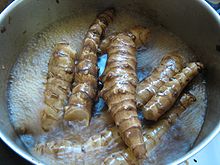
Jerusalem artichokes (Helianthus tuberosis) is a bumby, fleshy, root vegetable of the sunflower family.   Its underground, nutty, flavorful starch rich root is eaten much the same as a potato in many parts of Western Europe and Mediterranean regions.  Not to be confused with Globe Artichokes, which are edible flower buds, it is not an artichoke from Jerusalem.   Some other common names for the Jerusalem artichoke are "sunchoke", "Canadian truffles",and "topinambour"  

History:

Jerusalem artichokes are native to Central America.  They were first cultivated by the Native Americans long before the arrival of Europeans.  They were found domestically grown in Cape Cod in 1605.  Jerusalem artichokes were brought to France, and by the mid 1600's were commonly consumed in Europe and the Americas.  Jerusalem artichokes were titled, "Best Soup Vegetable at the 2002 Nice Festival for Heritage of French cuisine. 

Health Benefits:

Jerusalem artichokes are moderately high in calories, similar to a potato, but has negligible amounts of fat a contains no cholesterol..  Its high quality phyto-nutrition profile is comprised of dietary fiber and antioxidants in addition to small portions of minerals such as potassium, iron, and copper, and vitamins such as vitamin C, vitamin A, and vitamin E.  These vitamins along with flavonoid compounds like carotenes help scavenge harmful free radicals and there-by offer protection from cancer's inflammation and viral coughs and colds.  


Season:

Jerusalem artichokes, also called Sunchokes are commonly found in U.S. markets year round , but are there best from November to March. 

Selecting and Storing:

Select tubers with smooth surfaces , as they pose less difficulty in preparation.  Look for average size clean, firm tubers.  Avoid any that are sprouted, diseased or have bruised roots.  
Once home store in a cold, dark section of the refrigerator for up to 10 days. 

Using:

Jerusalem artichokes can be cooked much the same way as potatoes or parsnips, and are excellent roasted, sauteed or dipped in batter and fried, or pureed to make a delicious soup.  
Jerusalem artichokes can also be:
  • finely julienned as a great addition to salads or slaw
  • cut into thin slices and fried in vegetable oil like potato chips
  • boiled and pureed to use as a dip or filling for pancakes
  • added as a complement to potatoes or in soups or stews
  • roasted as a side side dish 

So..... Eat up!  Enjoy!  I'll show you how.


Simple but Good: 

Roasted Jerusalem Artichokes:


1 lb Jerusalem artichokes
3/4 cup olive oil
2 TBS dried thyme
1 TBS minced garlic
Sea salt to taste

Preheat oven to 350 degrees F. 
Scrub Jerusalem artichokes, and cut out eyes.  Cut into 1 inch cubes.
Mix olive oil, thyme. garlic, and sea salt in a large bowl.
Add Jerusalem artichoke pieces in an evenly spaced layer on a baking sheet.
Roast in the preheated oven until tender (about 35 - 45 minutes).


Please share our blog with your friends.


(adsbygoogle = window.adsbygoogle || []).push({});

amzn_assoc_ad_type = "contextual"; amzn_assoc_tracking_id = "fruita0f-20"; amzn_assoc_marketplace = "amazon"; amzn_assoc_region = "US"; amzn_assoc_placement = "OZL7KATSDNEQZ7CN"; amzn_assoc_linkid = "OZL7KATSDNEQZ7CN"; amzn_assoc_emphasize_categories = ""; amzn_assoc_fallback_products = ""; amzn_assoc_width = "300"; amzn_assoc_height = "250";
Thursday, September 8, 2016

Guavas

Guavas:

About:

Guavas are common tropical  fruits cultivated and enjoyed in many tropical and subtropical regions.  The "apple guava" (Psidium guajava) is a small tree in the Myrtle family native to Mexico, Central America, and northern South America.  It is the most frequently eaten species often referred to as "the guava".   Soft, sweet, and fragrant, when ripe guavas are small, round or oval  with varying colors from yellow to pink to dark red.  Guavas have a pronounced and typical fragrance similar to lemon rind, but less sharp.  The outer skin may be rough often with a bitter taste, or soft and sweet.  Although the guava is cultivated and favored by humans, many animals and birds consume it readily dispersing its seeds in their droppings.  


History:

Guavas originated from an area thought to extend from Mexico or Central America and was distributed throughout tropical America and the Caribbean region..  They were adopted as a crop in subtropical and tropical Asia, the southern U.S. and tropical Africa.   One of the first references to guava fruit was made in 1526 in the West Indies.  They were not introduced in Florida until 1847. 

My Story:

I don not remember having guavas very often in the produce department, but I do remember having guava juice in cans down the juice aisle of the grocery department.  Guavas were not something we had in our house very often. 

Uses:

In Mexico the guava aqua fresca beverage is popular.  The entire fruit is a key ingredient in punch and the juice is often in culinary sauces both hot and cold.  In many countries guava is eaten raw typically cut into quarters or eaten like an apple.  It is known as the winter national fruit of Pakistan. Because of its high level of pectin guava is extensively used to make candies, preserves, jellies, jams, and marmalade, and also for juices.   
Wash the entire guava as the rind is edible.  Slice and eat the entire fruit or cut it in half and scoop out the insides.  Refrigerate any leftover cut fruit. 


Nutrition:

Guavas are rich in dietary fiber and vitamin C with moderate levels of folic acid.  A single guava contains 4 times the vitamin C as an orange.  Guavas are a very good source of vitamin A and flavonoids like beta-carotene, lycopene, lutein amd cryptoxanthin.  They are a very rich source of potassium and a moderate source of B-complex vitamins such as pantothenic acid, niacin, vitamin B-6.  Minerals present in guavas include magnesium, copper, and manganese.

Health Benefits:

Health benefits of guava include the treatment of diarrhea, dysentery, constipation, cough, cold, skin care high blood pressure, weight loss, and scurvy.  Intake of guava can help patients with diabetes.  The high level of dietary fiber in guava helps regulate the absorption of sugar by the body which decreases the chances of major spikes and drops in insulin and glucose in the body.
Adding guava to your diet can inhibit the growth and metastasis of cancerous cells.  Guavas are rich in lycopene, a powerful antioxidant that has been successful in reducing prostate cancer risk.
Guava helps reduce cholesterol in the blood and prevents it from thickening thereby maintaining the fluidity of blood and reducing high blood pressure.


Season: 

Late spring, summer, and early fall. 


Choosing and Storing:

Choose guavas that do not have any blemishes and give slightly to gentle pressure.
Avoid guavas that are hard or have blemishes.
Ripen guavas at room temperature for a day or two.  Refrigerate ripened guavas up to 4 days.  Frozen ripe  guavas will keep up to 8 months.

So..... Eat up!  Enjoy!  I'll show you how.


Simple but Good: 


Guava Jelly:

3 cups guavas, peeled and chopped
3 cups water
1 TBS apple cider vinegar
3/4 cup sugar
2 limes, juiced
1 tsp salt

Place all ingredients in a medium saucepan.  Bring to a boil.  Reduce heat to medium low and simmer for 30 minutes.
Remove from heat and let cool.  Pour mixture through a fine mesh sieve to separate the seeds.  Use a large spoon to press solids to release juices.
Return seedless mixture to saucepan and return to a boil.  Reduce to medium low and let simmer for 40 minutes, or until thickened. 
Remove from heat and let cool.  Pour into jars and refrigerate until use.  The jelly will thicken as it cools. 


(adsbygoogle = window.adsbygoogle || []).push({});

amzn_assoc_ad_type = "contextual"; amzn_assoc_tracking_id = "fruita0f-20"; amzn_assoc_marketplace = "amazon"; amzn_assoc_region = "US"; amzn_assoc_placement = "OZL7KATSDNEQZ7CN"; amzn_assoc_linkid = "OZL7KATSDNEQZ7CN"; amzn_assoc_emphasize_categories = ""; amzn_assoc_fallback_products = ""; amzn_assoc_width = "300"; amzn_assoc_height = "250";

Tuesday, August 23, 2016

Broad (Fava) Beans

Broad Beans:

About:

The broad bean (Vicia faba) is also known as the fava bean, faba bean, field bean, bell bean, English bean, horse bean, Windsor bean, pigeon bean, and the tic bean.  It is a species of flowering plant in the vetch and pea family.  The fruit of the fava plant is a broad leathery pod, green maturing to blackish brown with a densely downy surface.
Broad beans are generally eaten while still young and tender, enabling harvesting to begin as early as middle Spring.  The immature pods are can also be cooked and eaten, and the young leaves of the plant can be eaten either raw or cooked.  Preparing broad beans involves first removing the beans from their pods.  In some cuisines, particularly in France and the U.S. the beans outer skin is removed through blanching.  In most other parts of the world the skin is not removed.  The beans can be fried causing the skin to split open , and then salted or spiced to produce a savory snack.   Broad beans are rich in tyramine, and this should be avoided by those taking MAOI's which are used to treat depression, Parkinson's disease and several other disorders. 


History:

The origin of this legume is obscure, but it has been cultivated in the Middle East for 8000 years before it spread to Western Europe.  Fava beans have been found in the earliest human settlements.  Remains have been found in Egyptian tombs.  Fava beans were cultivated by the Egyptians, Greeks, and Romans. 
Broad beans have a long tradition of cultivation in Old World agriculture, being among the most ancient plants in cultivation, and also among the easiest to grow.   The are still often grown as a cover crop to prevent erosion because they can overwinter and because as a legume they fix nitrogen in the soil.

My Story:  

 I remember fava beans from my days in my grandfather's store in Brooklyn, NY.  Fava beans were an item that was displayed on the sidewalk display in the front of the store.  There were bushel baskets that were dummied to about 2 inches from the top and product was displayed in that 2 inch area.  The fava beans were of course in their pods.  Every evening at closing time the display would have to be taken down and put in the store.  I remember one time when I was taking down the fava beans and a customer was out there and said to me, "That's some good eating right there!"  

Nutrition:

  • Fava beans are very high in protein
  • A rich source of dietary fiber
  • High in phyto-nutrients such as iso-flavone and plant sterols
  • Contain Levo-dopa of L-dopa, a precursor of neuro-chemicals in the brain, such as dopamine, epinephrine, and nor-epinepherone
  • Excellent source of folates
  • Have good amounts of vitamin B6, thiamine, riboflavin, and niacin
  • Are a fine source of minerals like iron, copper, manganese, calcium, magnesium, and potassium

Season:

Fava beans are a winter season crop.  In the market they are available fresh from March until June.


Preparing:

Choose green pods that are not bulging or yellow. Remove the beans from the pod by snapping off a piece of the tip and pulling down the string to open the pod.  Remove the beans.  Place the beans in a pot of boiling water for 30 seconds.  Remove the beans to an ice water bath to stop the cooking.  With your fingers squeeze the beans out from the thick skin.  The beans are now recipe ready. 

Uses:

Fava beans are versatile vegetables. They are good in stews, soups, and stir-fries along with spices, herbs, rice, semolina, peas, carrots, onion, tomato, lamb, poultry, and seafood.  

Favism:

Favism, which gets its name from the fava bean, is a genetic condition affecting a small population with G-6PD enzyme deficiency which compromises the oxygen carrying capacity of the blood.  The condition is triggered in those individuals on eating fava beans or their products in the diet as well as by some drugs and infections.  Prevention mostly includes avoidance of any fava bean products

So..... Eat up!  Enjoy!  I'll show you how.


Simple but good:

Garden Linguine with Ricotta


2 TBS coarse salt
1 lb fresh fava beans, shelled
1 lb fresh or frozen peas
1 lb linguine
1 cup ricotta cheese
1/2 cup grated Parmesan cheese
1/4 cup chopped mint leave, extra for garnish
1/4 tsp fresh ground black pepper
2 TBS extra virgin olive oil

Fill a large stockpot with water add salt and bring to a boil.  Prepare an ice water bath. Lower fava beans in a sieve into the boiling water and boil for 1 minute.  Remove to the ice water bath.  Transfer to a colander and peel and discard the tough outer skins. set aside.  
In the same blanching water blanch peas until just tender (2 - 3 minutes).  Remove and place in ice water. Drain and set aside. 
Discard blanching water and fill pot with fresh water and 1 TBS salt.  Bring to a boil.  Add pasta and cook to al-dente.
In a large bowl combine ricotta, Parmesan, chopped mint and 1/4 tsp pepper.  Just before pasta is finished cooking remove 1 cup of the hot water and add to the cheese mixture and stir.  Drain pasta and transfer to a serving bowl.  Add olive oil and toss.  Add cheese mixture and reserved fava beans and peas.  Toss to combine.  Season with salt and pepper.  Garnish with  mint leaves

  
(adsbygoogle = window.adsbygoogle || []).push({});

amzn_assoc_ad_type = "contextual"; amzn_assoc_tracking_id = "fruita0f-20"; amzn_assoc_marketplace = "amazon"; amzn_assoc_region = "US"; amzn_assoc_placement = "OZL7KATSDNEQZ7CN"; amzn_assoc_linkid = "OZL7KATSDNEQZ7CN"; amzn_assoc_emphasize_categories = ""; amzn_assoc_fallback_products = ""; amzn_assoc_width = "300"; amzn_assoc_height = "250";

Wednesday, August 17, 2016

Cashews


Cashews:

About:

The cashew tree (Anacardium  occidentale) is a tropical evergreen tree that produces the cashew seed and the cashew apple.   Cashews belong to the same family as the mango and the pistachio nut.  The cashew seed often simply called a cashew is widely eaten on its own, used in recipes, or processed into cashew cheese or cashew butter.  

The cashew apple is a light reddish to yellow fruit whose pulp can be processed into a sweet astringent fruit drink or distilled into a liquor.  The shell of the cashew seed yields derivatives that can be used in many applications from lubricants to paints.  
Cashew nuts are actually the kidney shaped seeds that adhere to the bottom of the cashew apple, the fruit of the cashew tree.  
Cashews in shell are not available in the store.  This is because the nuts are always sold pre-shelled since the interior of the shells contain a caustic resin known as cashew balm, which must be carefully removed before they are fit for consumption.  The caustic resin is actually used in industry to make varnishes and insecticides.

History:  

The cashew tree is native to coastal areas of Brazil.  In the 16th century Portuguese explorers took cashew trees from this South American country and introduced them into other tropical regions such as India, and African countries, where they are now cultivated.  Today the leading commercial producers of cashews are India, Brazil, Mozambique, Tanzania, and Nigeria.  


Nutrition:

A 100 gram (3.5 oz.) serving of cashews provides 30 grams carbohydrates, 43.85 grams fat, 18.22 grams protein, and are a source of dietary minerals including copper, manganese, phosphorus, and magnesium, and of thiamine, vitamins B6 and K,  iron, potassium, zinc, and selenium.  Cashews contain 113mg of beta sitosterol.  Cashews are an excellent source of copper and a good source of phosphorous, magnesium, manganese and zinc. 

Health Benefits:

While high in calories, cashews are packed with soluble dietary fiber, vitamins, minerals, and numerous health promoting phyto-chemicals that protect from diseases and cancers.  Cashews are rich in "heart-friendly" monounsaturated fatty acids like oleic and palmitoleic acids, which help lower LDL(bad) cholesterol, while increasing HDL(good) cholesterol. 

Selecting and Storing:

Cashews are generally available in prepackaged containers as well as bulk bins.  As with other bulk foods make sure the bins are covered and the store has a good product turnover for maximum freshness.  Avoid product with evidence of moisture or insect damage, and product that is shriveled.  If possible smell the product to ensure it is not rancid.
Cashews should be stored in a tightly sealed container in the refrigerator, where they will keep for about 6 months, or in the freezer, where they will keep for about 1 year.


So........ Eat up!  Enjoy!  I'll show you how.

Please share our blog.

Simple but good:

Chicken with Cashews Stir-fry:

1 bunch scallions 
1 lb skinless, boneless chicken thighs
1/2 tsp salt
1/4 tsp black pepper 
3 TBS  vegetable oil
1 red bell pepper, chopped
4 cloves garlic, finely chopped
1 1/2 TBS finely chopped peeled fresh ginger
1/4 tsp dried hot red pepper flakes
3/4 c. low sodium chicken broth
1 1/2 TBS soy sauce
1 1/2 tsp corn starch
1 tsp sugar
1/2 c. salted roasted whole cashews

Chop scallions separating white and yellow parts.  Pat chicken dry, then cut into 3/4 inch pieces and toss with salt and pepper.  Heat a wok or 12 inch skillet to moderate heat. Add oil and swirl to coat then stir-fry chicken   until golden and just cooked through (4 - 5 minutes).  Transfer to a plate.  Add bell pepper, garlic, red pepper flakes and scallion whites and stir-fry until peppers are just tender(5 - 6 minutes). Stir together broth, soy sauce, corn starch and sugar, then stir into vegetables.  Reduce heat and simmer stirring occasionally until thickened (1 - 2 minutes.  Stir in cashews, scallion greens, and chicken with any juices. 
(adsbygoogle = window.adsbygoogle || []).push({});

amzn_assoc_ad_type = "contextual"; amzn_assoc_tracking_id = "fruita0f-20"; amzn_assoc_marketplace = "amazon"; amzn_assoc_region = "US"; amzn_assoc_placement = "OZL7KATSDNEQZ7CN"; amzn_assoc_linkid = "OZL7KATSDNEQZ7CN"; amzn_assoc_emphasize_categories = ""; amzn_assoc_fallback_products = ""; amzn_assoc_width = "300"; amzn_assoc_height = "250";

Monday, August 8, 2016

Olives

Olives:

About:

The olive (Olea europaea) is a species of small tree in the family Oeaceae found in much of Africa, the Mediterranean Basin from Portugal to the Levant, the Arabian Peninsula from southern Asia as far east as China, as well as the Canary Islands, Mauritius, and Re'union.  The species is cultivated and considered naturalized in the countries of the Mediterranean coast as well as in Argentina, Saudi Arabia, Java, Norfolk Island, California, and Bermuda.   
 The olive tree is an evergreen tree or shrub native to the Mediterranean, Asia, and Africa.  Olives belong to a group of fruit called "drupes" or stone fruit.  They are related to mangoes, cherries, peaches, almonds, and pistachios.  The olive's fruit, also called olives, is of major agricultural  importance in the Mediterranean region as the source of olive oil, one of the core ingredients in Mediterranean cuisine.  
Olives constitute one of the world's largest fruit crops with more than 25 million acres of olive trees planted worldwide, greater amounts than either grapes, apples, or oranges.  In the U.S. where most cultivation is in California there are 5 major varieties that are commercially produced:  Manzanillo, Sevillano, Mission, Ascolano, and Barouni.  There are hundreds of varieties of olive trees, but they all belong to the scientific category of "Olea europea".  Olive trees are native to the Mediterranean as well as parts of Asia and Africa. 

History:

The olive tree as we know it today is believed to have had its origin 6000 to 7000 years ago in the region corresponding to ancient Persia and Mesopotamia.  The olive plant later spread to present day Syria, Lebanon, Israel, and the Palestinian territories.

My Story:

Growing up Italian there were usually olives around.  I remember a cousin that loved olives so much they would call her "The Olive Kid".  Her name was Joanie.   I also remember my father telling the story of how olives were pitted by machine and the resistance from workers who hand pitted olives.  My favorite, though, is when little kids will remove the stuffing from pitted olives and then put the olive on their fingers.  My granddaughters did that, but I guess all kids do it.


Olive Curing:

Olives are too bitter to eat right from the tree. They must be cured to reduce the bitterness.  
Processing methods vary with olive variety, region where they are cultivated, and the desired taste, texture and color.  Some olives are picked unripe, others are allowed fully ripen on the tree.  The color of an olive is not necessarily related to its ripeness.  Some start  off green and turn black as they ripen.  Others start off green and remain green when fully ripe.  The olives are typically green in color when picked  in an unripe state, lye-cured, and then exposed to air as a way of triggering oxidation and conversion to a black outer color.  
There are 3 basic types of curing, water-curing, Brine-curing, and Lye-curing:

Water-curing:  submerging in water for several weeks or longer.  Water-cured olives typically remain slightly bitter  because water-curing removes less oleuropein than other curing methods.

Brine-curing:  submerging in a concentrated salt solution.  Greek style olives in brine and Sicilian style  olives in brine are examples.  

Lye-curing:  Submersion in a strong alkaline solution.  Lye-curing is usually done in a series of sequential steps.  Up to 5 steps may be required to cure the entire olive from skin to pit.  Dark style ripe olives and green olives are examples of lye-cured olives.


Health Benefits:

Greek-style black olives, Spanish-style green olives, Kalamata-style olives, and many different methods of olive preparation provide us with valuable amounts of many different antioxidants and anti-inflammatory nutrients.   The high monounsaturated content of olives has been associated with reduced risk of cardiovascular disease.  
Many of the phytonutrients found in olives have well documented anti-inflammatory properties.   The antioxidant and anti-inflammatory properties of olives make them a natural for protection against cancer, because chronic oxidative stress and chronic inflammation can be key factors in the development of cancer.  
Olives are very high in vitamin E and other powerful antioxidants.  Studies show that they are good for the heart and may protect against osteoporosis and cancer.

Symbolism:

Olive oil has long been considered sacred.  The olive branch was often a symbol of abundance, glory, and peace.  The leafy branches of the olive tree were ritually offered to deities and powerful figures as emblems of benediction and purification.  They were used to crown the victors of friendly games and bloody wars.  Today olive oil is still used in many religious ceremonies.  Over the years the olive has been the symbol of peace, wisdom, glory, fertility, power and purity.


Selecting and Storing:

 Olives are traditionally sold in jars and cans, but are now often offered bulk in large barrels or bins.  Buying bulk will allow you to purchase small amounts to try out different varieties.   Whole olives are common, but you may also find them pitted and even stuffed with peppers, garlic, or almonds.  When buying bulk, purchase from a store that has a good turnover and keeps the olives submerged in brine to retain freshness and moisture.  
It is not uncommon to find olives that include green, yellow-green, green-grey, rose, red brown, dark red, purplish-black and black.  There are also several textures including shiny, wilted, or cracked.  In general regardless of the variety you choose, select olives that still display a reasonable amount of firmness and are not overly soft or mushy.

Canned olives can be transferred to a sealed container in the refrigerator and kept for one to two weeks.  Glass jars of olives can be stored directly in the refrigerator for the same period  and in the case of brine-cured olives for up to one to two months.


Easy Uses of Olives:

  • Olive tapenade is a delicious and easy-to-make spread that can be used as a dip, sandwich spread, or topping for fish or poultry.  To make tapenade put pitted olives in a food processor with olive oil and your favorite seasonings. 
  • Toss pasta with chopped olives, tomatoes, garlic, olive oil, and fresh herbs.
  • Add chopped olives to your favorite tuna or chicken salad.
  • Set out a small plate of olives with some vegetable crudites to eat with the meal.

So........ Eat up!  Enjoy!  I'll show you how.

Simple but good:

Greek Salad


4 cups salad greens
2 TBS chopped mint
3 TBS crumbled feta cheese
2 TBS chopped olives
1/2 cup garbanzo beans
1 TBS extra virgin olive oil
1 TBS red wine vinegar
Salt and pepper to taste

Combine first 5 ingredients
Toss with olive oil and vinegar
Add salt and pepper to taste.


(adsbygoogle = window.adsbygoogle || []).push({});

amzn_assoc_ad_type = "contextual"; amzn_assoc_tracking_id = "fruita0f-20"; amzn_assoc_marketplace = "amazon"; amzn_assoc_region = "US"; amzn_assoc_placement = "OZL7KATSDNEQZ7CN"; amzn_assoc_linkid = "OZL7KATSDNEQZ7CN"; amzn_assoc_emphasize_categories = ""; amzn_assoc_fallback_products = ""; amzn_assoc_width = "300"; amzn_assoc_height = "250";

Friday, July 15, 2016

Ratatouille

Ratatouille:

About:

Ratatouille (ra - ta - too - ee) is a traditional French Provencal dish originating in Nice.  Commonly reffered to as 'ratatouille nicoise', ratatouille is popular along the entire Mediterranean as an easy summer dish.
Ratatouille is usually served as a side dish with dinner, but is also used in breakfast and lunch settings.  Ratatouille is sometimes eaten as a meal of its own accompanied by pasta, rice or bread. 


Tomatoes lay a foundation for sautee'd garlic, onions, zucchini, eggplant, bell peppers, marjoram, fennel, and basil. or bay leaf and thyme, or a mix of green herbs like herbs de Provence.  It is usually prepared as a stew of squash.

History:

The word 'ratatouille' comes from Occitan ratatolha and the recipe comes from Occitan cuisine.  Related dishes exist in many Mediterranean cuisines.  The name "ratatouille" for the dish first appeared in print in 1930, but the word has been used since the late 18th century.  Ratatouille is also the name of a 2007 American computer-animated comedy film produced by Pixar and released by Buena Vista Pictures Distribution, featuring an anthropomorphic rat who aspires to cook.

My Story:

I had actually never heard of ratatouille until the movie came out.  I was familiar with caponata, which is an Italian version of ratatouille.  I like caponata very much.  The first time I had ratatouille was at a family dinner at a fish restaurant.  One of our nephews was working at this restaurant as a waiter, and it was decided that we would all go out to dinner there one night.  Well, ratatouille was on the menu, so I ordered it.  It was delicious.  So, now when I think of ratatouille, I think of that dinner with everyone there at a long table eating ratatouille. 

Ratatouille Methods:

There is much debate on how to make traditional ratatouille .  One method is to simply saute' all the vegetables together.  In the layering method approach eggplant and zucchini are sautee'd separately and the tomatoes, onion, garlic and bell peppers are made into a sauce.  The ratatouille is then layered in a casserole-eggplant, zucchini, and tomato/pepper mixture- then baked in  the oven.  A 3rd method is to combine all the ingredients in a large pot and simmer.
Joel Rabuchon in 'The Complete Rabuchon' states, "The secret of a good ratatouille is to cook the vegetables separately so that each will taste truly of itself."

Feeling adventurous?  Try ratatouille !

Eat up!  Enjoy!  I'll show you how.


Recipe for Ratatouille:

1 medium onion, thinly sliced
2 cloves garlic, minced
5 TBS olive oil
3/4 lb. eggplant, cubed 
1 small zucchini, quartered an d cut into small pieces
1 red bell pepper, chopped 3/4 lb. ripe tomato, coarsely chopped
1/4 tsp dried oregano, crumbled
1/4 tsp dried thyme, crumbled
1/8 tsp ground coriander
1/4 tsp fennel seed
3/4 tsp salt
pepper to taste
1/2 c. shredded fresh basil leaves

In a large skillet cook onion and garlic in 2 TBS olive oil until onion is soft..  Add remaining 3 TBS oil and heat through.  Add eggplant, cook 8 minutes stirring occaisonally.  Stir in the zucchini and bell pepper and cook for 12 minutes stirring occaisonally.  Stir in tomatoes and cook 5 minutesor until tender.  Stir in oregano, thyme, coriander, fennel seeds, salat, and pepper.  Cook for 1 minute.  Stir in basil and combine well.  
Ratatouille may be made 1 daay in advance.  Keep covered and chilled.  Reheat before serving. 


(adsbygoogle = window.adsbygoogle || []).push({});

amzn_assoc_ad_type = "contextual"; amzn_assoc_tracking_id = "fruita0f-20"; amzn_assoc_marketplace = "amazon"; amzn_assoc_region = "US"; amzn_assoc_placement = "OZL7KATSDNEQZ7CN"; amzn_assoc_linkid = "OZL7KATSDNEQZ7CN"; amzn_assoc_emphasize_categories = ""; amzn_assoc_fallback_products = ""; amzn_assoc_width = "300"; amzn_assoc_height = "250";