Showing posts sorted by date for query garlic. Sort by relevance Show all posts

Saturday, March 30, 2019

Foods That Help You Live Longer

Foods That Help You Live Longer:


These are Foods that are scientifically proven to help you live longer and healthier lives.  The information is from a video posted by Chiropractor Dr. Alan Mandell.
The foods listed foods are anti-inflammatory, high in antioxidants, high in fiber, and also high in Omega 3 fatty acids.  I believe you should include as many of these foods as you can in your diet for a longer and healthier life.  I have included links to posts from this blog next to most of the foods. 

1.  Leafy Greens (spinach, kale, arugula) 

2.  Extra Virgin Olive Oil

3.  Walnuts


10.  Hot Peppers

11.  Salmon

12.  Dark Chocolate (more than 75% cacao) https://fruitandveggiesense.blogspot.com/search?q=chocolate


                          https://fruitandveggiesense.blogspot.com/search?q=mint


18.  Yogurt  


</

Wednesday, February 20, 2019

Salanova Lettuce

SALANOVA Lettuce:

About:

Salanova lettuce (Lactuca sativa) is considered the newest innovation in salad mix production, and a superior hydrtoponic lettuce.  There are 5 different types of Salanova lettuce: Butterhead, Oakleaf, Lollo, Crispy, and Batavia, in two different colors, red and green with various shapes and texture.  Each variety has a round base and a rossette pattern with 3 times the amunt of leaves as a standard head of lettuce.  


Sometimes called "Triplehead", Salanova lettuce is made of small uniformly sized leaves growing in a uniquely structured core.  It is also known as easyleaf and multileaf.  Salanova lettuce is harvested when fully mature and may have a sweet flavor and a softer buttery texture or a crisp frilly texture with a crunch similar to iceberg.  

Season:

Salanova lettuce is available year-round.

Nutrition:

Salanova lettuce contains calcium, fiber, a small amount of protein and iron.  Red-leaf varieties offer anrioxidant benefits in the form of anthrocyanins, which are phytonutrients that give the lettuce its dark burgundy color. 

Uses:

Pairs well with Dijon mustard, yogurt, radish, cucumber, mint, bean sprouts, tomatoes, spring onions, red onions, garlic, anchovies, fish duck breast, prawns, and poultry. 
Salanova is a unique lettuce benefitting both commercial farms, and home gardens, because it is easy to grow, produces a higher yiel, has a longer shelf life, has improved resistance to disease, and requires less labor to haravest and prepare for market.


The Salanova lettuce cutter:


Sunday, December 2, 2018

Anti-inflammatory Foods Primer

The information in this post comes mainly from research done at the University of South Carolina.


Anti-inflammatory Foods Primer

Chronic inflammation has been linked to cancer, heart disease, diabetes, arthritis, depression, and Alzheimer's.  Carbohydrates, fat, and cholesterol are among the food components most likely to encourage inflammation.

Here are foods that cause inflammation:

  • Refined carbohydrates - white bread, pastries, pasta
  • French fries - and other fried foods 
  • Soda - and other sugar sweetened beverages
  • Red meat - burgers, steaks, processed meats
  • Margarine - shortening and lard
Anti-inflammatory Foods:

Magnesium, beta-carotene, vitamins A, B6, C, D, and E, fiber, omega-3 fatty acids, flavonoids, turmeric, and tea are the strongest anti-inflammatories.

Here are foods that are anti-inflammatory:


  • Chia Seeds
  • Wild fish (salmon)
  • Turmeric
  • Ginger                         
                                                                 
  • Garlic 
  • Broccoli
  • Dark Leafy green (Cruciferous-spinach, kale, collards)
  • Extra Virgin Olive Oil
  • Grapes
  • Flax seeds          
  • Papaya
  • Apple peel
  • Blueberries
  • Tea (esp. green)
  • Sweet Potatoes
  • Cinnamon
  • Greens (spinach, kale, collards, chard)
  • Asian mushrooms
  • Nuts (walnuts, almonds, cashews)
  • Avocado             
  • Hemp seeds
  • Cayene pepper                          
  • Kelp
  • Tart cherries
Full descriptions of most of these foods can be found in articles of this blog.  Just put the item in the search box in the upper left corner of the page and click to be taken to the artcle.

If you found this post helpful, please share it.

So eat up!  Enjoy!  Food can also be medicine.

Friday, February 2, 2018

Kimchi

Kimchi:

About:

Kimchi, a staple in Korean cuisine , is a traditional side dish made from salted and fermented vegetables, most commonly nappa cabbage and Korean radishes with a variety of seasonings including chili powder,m scallions , garlic, ginger, and jeatgal (salted seafood).   There are hundreds of varieties of kimchi made from different vegetables as the main ingredient.  In traditional preparations kimchi was stored underground in jars to keep It cool, and then unfrozen in the winter months.  Today kimchi refrigerators are more commonly used to make kimchi.
Kimchi is served at every meal , either alone or mixed with rice or noodles.  Kimchi is used in everything from soups to pancakes and as a topping on pizza and burgers.   As part of a high fiber, low fat diet, kimchi has kept obesity ast bay in Korea. 
Native Koreans say, "Kimchi!" when they are having their picture taken instead of "cheese". 

History:

The origin of Kimchi dates back at least to the early period of the 3 Kingdoms (37BC - 7AD).  Fermented foods were widely available, as Records of the Three Kingdoms, a Chinese historical text published in 289AD mentions.   A 23003 article in the Los Angeles Times reported that South Koreans consume 40 pounds of kimchi per person annually. 


Nutrition:

Kimchi is loaded with vitamins A, B, and C.  It's biggest benefit may be its healthy bacteria, called lactobacilli found in fermented foods such as kimchi and yogurt.  This good bacteria helps with digestion.  Some studies have shown that fermented cabbage has compounds that may help prevent the growth of cancer.  Kimchi is made of various vegetables and contains a high concentration of dietary fiber while being low in calories.  One serving of kimchi provides 50% of the daily recommended amount of vitamin C  and carotene.  Most types of kimchi contain onion, garlic, ginger, and chili peppers.  Kimchi is rich in vitamin A, thiamine (B1), and riboflavin (B).


Health Benefits:

Health benefits of kimchi:

  •  Promotes digestion, source of probiotics
  • Regulates cholesterol
  • Antioxidant Properties with phenols and flavonoids
  • Treats atopic dermatitis's
  • Helps with weight loss 
  • Boosts immune system
  • Has anti-aging properties
  • Prevents cancer
  • Treats diabetes - study shows better glucose tolerance, and lower fasting glucose

Ways to Use Kimchi:

  1. Add kimchi to scrambled eggs
  2. Layer kimchi on grilled chicken 
  3. Whip kimchi into develed eggs
  4. Put kimchi into tacos
  5. Stir kimchi into fried rice
  6. Stuff kimchi into a quesadilla
  7. Put kimchi on a pizza
  8. Top a rice bowl with kimchi


Prepared kimchi is available in your local supermarket.  While you can make it yourself, that is for after you've tried it and know you like it.


Tuesday, October 24, 2017

Tofu or Not Tofu

Tofu:

About:

Tofu is also known as bean curd.  It is made by coagulating soy milk and then pressing the resulting curds into a soft whi8te block.  It is an ingredient in East Asian and Southeast Asian cuisine.   Tofu can be soft, firm, or extra firm.  It has a subtle flavor and can be used in savory and sweet dishes.  It is often seasoned or marinated to suit a dish. 
The production of tofu essentially consists of :
1.  Preparation of soy milk;
2.  Coagulation of soy milk to form curds;
3.  Pressing the soybean curds to form cakes.

In Asian cooking tofu is eaten raw, stewed, stir fried, in soup, cooked in sauce, or stuffed with fillings.  Using tofu as a meat substitute is uncommon in East Asia. 

History:

Tofu making was first recorded during the Chinese Han dynasty some 2000 years ago.  Its production techniques were introduced into Korea and then Japan.  Ben Franklin was the first American to mention tofu in a 1770 letter to John Bartram. 

Nutrition:

Tofu has a low calorie count and relatively large amount of protein.  It is high in iron and can have high calcium or magnesium content depending on the coagulants used in its manufacture.

A 3.5 ounce (100 gram) serving of tofu contains:

Protein:  8 grams
Carbs:  2 grams
Fiber:  1 gram
Fat:  4 grams
Manganese:  31% of the RDI
Calcium:  20% of the RDI
Selenium:  14% of the RDI
Phosphorus:  12% of the RDI
Copper:  11% of the RDI
Iron:  9% of the RDI
Zinc:  6% of the RDI

70 calories.

Health Benefits:

Many of the health benefits of tofu are attributed to the high isoflavone content.  Isoflavones are natural plant compounds found in soybeans.  The 2 main isoflavones in soy are genistein and daidzein. 
 Research indicates that soy has a  protective effect against breast, digestive, and prostate cancers .

Potential Health Benefits of Tofu Due to high isoflavone content
Bone health:  80mg of soy isoflavones per day may reduce bone loss especially in early menopause.
Brain Function = soy isoflavones may have a positive influence on memory and brain function, especially in women over 65.
Skin Elasticity - taking 40 mg of soy isoflavones per day significantly reduces wrinkles and improves skin elasticity.

Tofu may reduce the risk of Heart Disease:
Research has shown that high intake of legumes, including  soy, is linked to lower rates of heart disease.  We know that soy isoflavones can reduce blood vessel inflammation and improve their elasticity.
One study fouynd that supplementing with 80 mg of isoflavones per day for 12 weeks improved blood flow by 68% in patients who are at risk of stroke.
Taking 50 grams of soy protein per day is associated with improved blood fats and estimated 10% lower risk of heart disease.
In post menopausal women high soy isoflavone intake was linked to several 

Selecting:

Tofu can be purchased in bulk or individual packages, refrigerated or non-refrigerated.
You can also find dehydrated, freeze dried,jarred or canned tofu.

Generally, not a lot of processing is necessary to make tofu, so choose varieties with short nutrition labels. 

Once opened tofu blocks need to be rinsed before being used.      

Tofu can be frozen, in its original package for up to 5 months.

Contra Tofu:

According to Dr. Kaayla Daniel, author of "The Whole Soy Story" soy is not a health food, does not prevent disease, and has not even been proven safe.   Numerous scientific studies link soy to digestive troubles, malnutrition, thyroid dysfunction, cognitive decline, reproductive disorders as well as heart disease and cancer. 


Dr Josh Axe, nutritional guru and blogger lists 8 Reasons to Not Eat Tofu

  1. Genetic Modification:  Today at least 90% of all soy grown in the U.S. is genetically modified and GMO foods are linked to so many health problems, because they kill off good bacteria in your gut and damage the working of your digestive system
  2. Phytoestrogens and Breast Cancer:  tofu contains phytoestrogens that have an estrogen - like effect on the body which blocks normal estrogen production and have been linked to breast cancer.
  3. Thyroid Disruption:  Goitrogens that are in soy products are thyroid hormone blockers that can interfere with thyroid hormone production and cause hypothyroidism.
  4. Antimutrients:  Soy products like tofu contain several antinutrients that can lead to leaky gut, gas, kidney stoines, vulvodynia, malnutrition, poor protein digestion, poor growth, digestive distress, pancreatitis, and nutrient deficiencies.
  5. Cognitive Problems:  soy tofu has been linked with dementia and Alzheimer's disease.
  6. Vitamin B12 and Vitamin D Deficiencies:  tofu contains B12 analogs that stimulate vitamin B12 but can't be used by the body the way it uses real B12 while soy foods increase your vitamin D requirements which means eating tofu can make a vitamin D deficiency even worse.
  7. Digestive Difficulty:  Most people lack the enzymes to digest the unfermented soy food which causes indigestion, gas, bloating, and other gastrointestinal issues.
  8. Potential Heart Issues:  Research on animals has shown that a soy rich diet can potentially have a profound negative effect on heart health.

Good Tofu Alternatives:

Natto:
  • Fermented soy superfood
  • Lowers blood pressure
  • Source of protein, fiber, vitamins, and minerals
  • Contains good bacteria and nattokinase which produces vitamin K
Tempeh:
  • Made from fermented soybeans 
  • Uses whole soybeans, giving it high protein, vitamin and mineral content.
  • Reduces cholesterol
  • Increases bone density
  • Reduces menopausal symptoms
  • Promotes muscle recovery.

So..... Eat up.  Enjoy.  I'll show you how.

Serving Ideas for Tofu:

  • Blend together soft tofu , olive oil, garlic and lemon juice to make a tofu aoli dip
  • Scramble soft tofu together with your favoritevegetables and the spice turmeric to give it a yellow egg-like color.  Thisdelicious dish can be served as is or can be used as a basis for tofu rancheros by being wrapped in a tortilla and served with black beans and salsa.
  • Stior fry firm tofu with your favorite vegetables and seasonings. 
  • Blend soft tofu with your favorite fruits (and honey or other natural sweetner) and blend  .  Serve fora breakfast or dessert. 
  • Add cubes of tofu to miso soup. 

Tuesday, March 7, 2017

Quinoa

Quinoa:

About:

Quinoa (pronounced: keen - wah) is the common name for Chenopodium quinoa of the flowering plant family Amaranthiceae.  It is grown as a grain crop primarily for its edible seeds.  It is a pseudocereal rather than a true cereal due to its not being a grass.  Quinoa is closely related to the edible plants beetroot, spinach, and amaranth.
When cooked the nutrient composition is comparable to common cereals like wheat and rice supplying a moderate amount of dietary fiber and minerals.  Quinoa is gluten free and considered easy to digest.  2013 was declared the International Year of Quinoa
There are 3 main types of quinoa: white, red, and black.

History:

Quinoa originated in the Andean region of Peru, Bolivia, Ecuador, Columbia,m and Chile.  The Incas, who considered the crop to be sacred called the crop "Mother of all grain."  It was domesticated 3000 to 4000 years ago for human consumption.  It has become increasingly popular in the U.S. , Canada, Europe, Australia, China, and Japan.  Quinoa has become popular in the Jewish community as a substitute for the leavened grains that are forbidden during the Passover.  In 2013 the "Orthodox Union", the world's largest kosher certification agency announced it would begin certifying quinoa as kosher for Passover. 

Nutrition:

Quinoa is one of the few plant foods that contain all nine amino acids of protein.  It is also high in fiber, magnesium, B-vitamins, iron, potassium, calcium, phosphorus, vitamin E, and various beneficial antioxidants.  Quinoa is gluten free. 

Health Benefits:

  1.  Protein - 8 grams                                                                                                                              Fiber - 5 grams                                                                                                                                Manganese - 58% RDA                                                                                                                  Magnesium - 30% RDA                                                                                                                  Phosphorus - 28% RDA                                                                                                                  Folate - 19% RDA                                                                                                                            Copper - 18% RDA                                                                                                                          Iron - 15% RDA                                                                                                                              Zinc - 15% RDA                                                                                                                              Potassium - 9% RDA 
           Over 10% Vitamins B1, B2, B6                                                                                                                Small amounts calcium, B3 (niacin) and vitamin E                                                                                  Total 222 calories with 39 grams of carbs and 4 grams fat, and a small amount of omega3                     fatty acids.  No GMO, gluten free.

      2.  Contains the plant compounds quercetin and kaempferol which are flavonoids, which are plant antioxidants that have been shown to have all sorts of beneficial effects on health.  Quercetin and kaempferol have also been shown to have anti-inflammatory, anti-viral, anti-cancer and anti-depressant effects in animals.

     3.  Quinoa is much higher in fiber than most grains
    
     4.  Very high in protein with all the essential amino acids  

     5.  Has a low glycemic index , however is relatively high in carbohydrates

     6.  High in important minerals like iron and magnesium

     7.  Has beneficial effects on metabolic health.  Studies found quinoa significantly reduced blood                 sugar, insulin, and triglyceride levels

     8.  Very high in antioxidants

     9.  May help you loose weight because it is high in protein which can increase metabolism and                 reduce appetite.

Preparation:

Put 2 cups of water or broth in a pot.

Add 1 cup raw, rinsed quinoa, with a dash of salt.

Boil for 15 - 20 minutes until water absorbed 

Eat.

Eating Ideas:

  • Combine cooked chilled quinoa with pinto beans, pumpkin seeds, scallions and coriander.  Season to taste.  eat as a salad. 
  • Add nuts and fruits to cooked quinoa and serve as a breakfast porridge. 
  • Add quinoa to vegetable soup.
  • Use quinoa as a substitute for bulgar wheat when making tabbouleh.

So..... East up !  Enjoy !  I'll show you how.


Simple but Good:

Quinoa with Black Beans and Corn

3 cloves garlic, minced
1 onion chopped
1 tsp olive oil
3/4 cup raw quinoa rinsed with cold water
1 1/2 c vegetable broth 
1 tsp cumin 
1/4 tsp Cayenne pepper
Salt and pepper to taste 
1 c cooked kernel corn 
2 cans black beans drained and rinsed
1/2 cup chopped cilantro

Heat oil in saucepan over medium heat and saute onion and garlic until lightly brown (about 10 
minutes).
Mix quinoa into onion mixture and cover with broth.  Add cumin,  cayenne, pepper, and salt.  Bring to a boil Cover and  simmer until broth is absorbed (about 20 minutes.
Stir in corn and cook about 5 minutes.  Add black beans and cilantro.. 


(adsbygoogle = window.adsbygoogle || []).push({});

amzn_assoc_ad_type = "contextual"; amzn_assoc_tracking_id = "fruita0f-20"; amzn_assoc_marketplace = "amazon"; amzn_assoc_region = "US"; amzn_assoc_placement = "OZL7KATSDNEQZ7CN"; amzn_assoc_linkid = "OZL7KATSDNEQZ7CN"; amzn_assoc_emphasize_categories = ""; amzn_assoc_fallback_products = ""; amzn_assoc_width = "300"; amzn_assoc_height = "250";

Friday, October 21, 2016

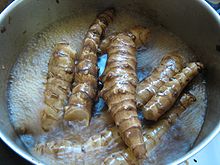
Jerusalem Artichokes (Sunchokes)

Jerusalem Artichokes (Sunchokes):

About:

Jerusalem artichokes (Helianthus tuberosis) is a bumby, fleshy, root vegetable of the sunflower family.   Its underground, nutty, flavorful starch rich root is eaten much the same as a potato in many parts of Western Europe and Mediterranean regions.  Not to be confused with Globe Artichokes, which are edible flower buds, it is not an artichoke from Jerusalem.   Some other common names for the Jerusalem artichoke are "sunchoke", "Canadian truffles",and "topinambour"  

History:

Jerusalem artichokes are native to Central America.  They were first cultivated by the Native Americans long before the arrival of Europeans.  They were found domestically grown in Cape Cod in 1605.  Jerusalem artichokes were brought to France, and by the mid 1600's were commonly consumed in Europe and the Americas.  Jerusalem artichokes were titled, "Best Soup Vegetable at the 2002 Nice Festival for Heritage of French cuisine. 

Health Benefits:

Jerusalem artichokes are moderately high in calories, similar to a potato, but has negligible amounts of fat a contains no cholesterol..  Its high quality phyto-nutrition profile is comprised of dietary fiber and antioxidants in addition to small portions of minerals such as potassium, iron, and copper, and vitamins such as vitamin C, vitamin A, and vitamin E.  These vitamins along with flavonoid compounds like carotenes help scavenge harmful free radicals and there-by offer protection from cancer's inflammation and viral coughs and colds.  


Season:

Jerusalem artichokes, also called Sunchokes are commonly found in U.S. markets year round , but are there best from November to March. 

Selecting and Storing:

Select tubers with smooth surfaces , as they pose less difficulty in preparation.  Look for average size clean, firm tubers.  Avoid any that are sprouted, diseased or have bruised roots.  
Once home store in a cold, dark section of the refrigerator for up to 10 days. 

Using:

Jerusalem artichokes can be cooked much the same way as potatoes or parsnips, and are excellent roasted, sauteed or dipped in batter and fried, or pureed to make a delicious soup.  
Jerusalem artichokes can also be:
  • finely julienned as a great addition to salads or slaw
  • cut into thin slices and fried in vegetable oil like potato chips
  • boiled and pureed to use as a dip or filling for pancakes
  • added as a complement to potatoes or in soups or stews
  • roasted as a side side dish 

So..... Eat up!  Enjoy!  I'll show you how.


Simple but Good: 

Roasted Jerusalem Artichokes:


1 lb Jerusalem artichokes
3/4 cup olive oil
2 TBS dried thyme
1 TBS minced garlic
Sea salt to taste

Preheat oven to 350 degrees F. 
Scrub Jerusalem artichokes, and cut out eyes.  Cut into 1 inch cubes.
Mix olive oil, thyme. garlic, and sea salt in a large bowl.
Add Jerusalem artichoke pieces in an evenly spaced layer on a baking sheet.
Roast in the preheated oven until tender (about 35 - 45 minutes).


Please share our blog with your friends.


(adsbygoogle = window.adsbygoogle || []).push({});

amzn_assoc_ad_type = "contextual"; amzn_assoc_tracking_id = "fruita0f-20"; amzn_assoc_marketplace = "amazon"; amzn_assoc_region = "US"; amzn_assoc_placement = "OZL7KATSDNEQZ7CN"; amzn_assoc_linkid = "OZL7KATSDNEQZ7CN"; amzn_assoc_emphasize_categories = ""; amzn_assoc_fallback_products = ""; amzn_assoc_width = "300"; amzn_assoc_height = "250";

Wednesday, August 17, 2016

Cashews


Cashews:

About:

The cashew tree (Anacardium  occidentale) is a tropical evergreen tree that produces the cashew seed and the cashew apple.   Cashews belong to the same family as the mango and the pistachio nut.  The cashew seed often simply called a cashew is widely eaten on its own, used in recipes, or processed into cashew cheese or cashew butter.  

The cashew apple is a light reddish to yellow fruit whose pulp can be processed into a sweet astringent fruit drink or distilled into a liquor.  The shell of the cashew seed yields derivatives that can be used in many applications from lubricants to paints.  
Cashew nuts are actually the kidney shaped seeds that adhere to the bottom of the cashew apple, the fruit of the cashew tree.  
Cashews in shell are not available in the store.  This is because the nuts are always sold pre-shelled since the interior of the shells contain a caustic resin known as cashew balm, which must be carefully removed before they are fit for consumption.  The caustic resin is actually used in industry to make varnishes and insecticides.

History:  

The cashew tree is native to coastal areas of Brazil.  In the 16th century Portuguese explorers took cashew trees from this South American country and introduced them into other tropical regions such as India, and African countries, where they are now cultivated.  Today the leading commercial producers of cashews are India, Brazil, Mozambique, Tanzania, and Nigeria.  


Nutrition:

A 100 gram (3.5 oz.) serving of cashews provides 30 grams carbohydrates, 43.85 grams fat, 18.22 grams protein, and are a source of dietary minerals including copper, manganese, phosphorus, and magnesium, and of thiamine, vitamins B6 and K,  iron, potassium, zinc, and selenium.  Cashews contain 113mg of beta sitosterol.  Cashews are an excellent source of copper and a good source of phosphorous, magnesium, manganese and zinc. 

Health Benefits:

While high in calories, cashews are packed with soluble dietary fiber, vitamins, minerals, and numerous health promoting phyto-chemicals that protect from diseases and cancers.  Cashews are rich in "heart-friendly" monounsaturated fatty acids like oleic and palmitoleic acids, which help lower LDL(bad) cholesterol, while increasing HDL(good) cholesterol. 

Selecting and Storing:

Cashews are generally available in prepackaged containers as well as bulk bins.  As with other bulk foods make sure the bins are covered and the store has a good product turnover for maximum freshness.  Avoid product with evidence of moisture or insect damage, and product that is shriveled.  If possible smell the product to ensure it is not rancid.
Cashews should be stored in a tightly sealed container in the refrigerator, where they will keep for about 6 months, or in the freezer, where they will keep for about 1 year.


So........ Eat up!  Enjoy!  I'll show you how.

Please share our blog.

Simple but good:

Chicken with Cashews Stir-fry:

1 bunch scallions 
1 lb skinless, boneless chicken thighs
1/2 tsp salt
1/4 tsp black pepper 
3 TBS  vegetable oil
1 red bell pepper, chopped
4 cloves garlic, finely chopped
1 1/2 TBS finely chopped peeled fresh ginger
1/4 tsp dried hot red pepper flakes
3/4 c. low sodium chicken broth
1 1/2 TBS soy sauce
1 1/2 tsp corn starch
1 tsp sugar
1/2 c. salted roasted whole cashews

Chop scallions separating white and yellow parts.  Pat chicken dry, then cut into 3/4 inch pieces and toss with salt and pepper.  Heat a wok or 12 inch skillet to moderate heat. Add oil and swirl to coat then stir-fry chicken   until golden and just cooked through (4 - 5 minutes).  Transfer to a plate.  Add bell pepper, garlic, red pepper flakes and scallion whites and stir-fry until peppers are just tender(5 - 6 minutes). Stir together broth, soy sauce, corn starch and sugar, then stir into vegetables.  Reduce heat and simmer stirring occasionally until thickened (1 - 2 minutes.  Stir in cashews, scallion greens, and chicken with any juices. 
(adsbygoogle = window.adsbygoogle || []).push({});

amzn_assoc_ad_type = "contextual"; amzn_assoc_tracking_id = "fruita0f-20"; amzn_assoc_marketplace = "amazon"; amzn_assoc_region = "US"; amzn_assoc_placement = "OZL7KATSDNEQZ7CN"; amzn_assoc_linkid = "OZL7KATSDNEQZ7CN"; amzn_assoc_emphasize_categories = ""; amzn_assoc_fallback_products = ""; amzn_assoc_width = "300"; amzn_assoc_height = "250";

Monday, August 8, 2016

Olives

Olives:

About:

The olive (Olea europaea) is a species of small tree in the family Oeaceae found in much of Africa, the Mediterranean Basin from Portugal to the Levant, the Arabian Peninsula from southern Asia as far east as China, as well as the Canary Islands, Mauritius, and Re'union.  The species is cultivated and considered naturalized in the countries of the Mediterranean coast as well as in Argentina, Saudi Arabia, Java, Norfolk Island, California, and Bermuda.   
 The olive tree is an evergreen tree or shrub native to the Mediterranean, Asia, and Africa.  Olives belong to a group of fruit called "drupes" or stone fruit.  They are related to mangoes, cherries, peaches, almonds, and pistachios.  The olive's fruit, also called olives, is of major agricultural  importance in the Mediterranean region as the source of olive oil, one of the core ingredients in Mediterranean cuisine.  
Olives constitute one of the world's largest fruit crops with more than 25 million acres of olive trees planted worldwide, greater amounts than either grapes, apples, or oranges.  In the U.S. where most cultivation is in California there are 5 major varieties that are commercially produced:  Manzanillo, Sevillano, Mission, Ascolano, and Barouni.  There are hundreds of varieties of olive trees, but they all belong to the scientific category of "Olea europea".  Olive trees are native to the Mediterranean as well as parts of Asia and Africa. 

History:

The olive tree as we know it today is believed to have had its origin 6000 to 7000 years ago in the region corresponding to ancient Persia and Mesopotamia.  The olive plant later spread to present day Syria, Lebanon, Israel, and the Palestinian territories.

My Story:

Growing up Italian there were usually olives around.  I remember a cousin that loved olives so much they would call her "The Olive Kid".  Her name was Joanie.   I also remember my father telling the story of how olives were pitted by machine and the resistance from workers who hand pitted olives.  My favorite, though, is when little kids will remove the stuffing from pitted olives and then put the olive on their fingers.  My granddaughters did that, but I guess all kids do it.


Olive Curing:

Olives are too bitter to eat right from the tree. They must be cured to reduce the bitterness.  
Processing methods vary with olive variety, region where they are cultivated, and the desired taste, texture and color.  Some olives are picked unripe, others are allowed fully ripen on the tree.  The color of an olive is not necessarily related to its ripeness.  Some start  off green and turn black as they ripen.  Others start off green and remain green when fully ripe.  The olives are typically green in color when picked  in an unripe state, lye-cured, and then exposed to air as a way of triggering oxidation and conversion to a black outer color.  
There are 3 basic types of curing, water-curing, Brine-curing, and Lye-curing:

Water-curing:  submerging in water for several weeks or longer.  Water-cured olives typically remain slightly bitter  because water-curing removes less oleuropein than other curing methods.

Brine-curing:  submerging in a concentrated salt solution.  Greek style olives in brine and Sicilian style  olives in brine are examples.  

Lye-curing:  Submersion in a strong alkaline solution.  Lye-curing is usually done in a series of sequential steps.  Up to 5 steps may be required to cure the entire olive from skin to pit.  Dark style ripe olives and green olives are examples of lye-cured olives.


Health Benefits:

Greek-style black olives, Spanish-style green olives, Kalamata-style olives, and many different methods of olive preparation provide us with valuable amounts of many different antioxidants and anti-inflammatory nutrients.   The high monounsaturated content of olives has been associated with reduced risk of cardiovascular disease.  
Many of the phytonutrients found in olives have well documented anti-inflammatory properties.   The antioxidant and anti-inflammatory properties of olives make them a natural for protection against cancer, because chronic oxidative stress and chronic inflammation can be key factors in the development of cancer.  
Olives are very high in vitamin E and other powerful antioxidants.  Studies show that they are good for the heart and may protect against osteoporosis and cancer.

Symbolism:

Olive oil has long been considered sacred.  The olive branch was often a symbol of abundance, glory, and peace.  The leafy branches of the olive tree were ritually offered to deities and powerful figures as emblems of benediction and purification.  They were used to crown the victors of friendly games and bloody wars.  Today olive oil is still used in many religious ceremonies.  Over the years the olive has been the symbol of peace, wisdom, glory, fertility, power and purity.


Selecting and Storing:

 Olives are traditionally sold in jars and cans, but are now often offered bulk in large barrels or bins.  Buying bulk will allow you to purchase small amounts to try out different varieties.   Whole olives are common, but you may also find them pitted and even stuffed with peppers, garlic, or almonds.  When buying bulk, purchase from a store that has a good turnover and keeps the olives submerged in brine to retain freshness and moisture.  
It is not uncommon to find olives that include green, yellow-green, green-grey, rose, red brown, dark red, purplish-black and black.  There are also several textures including shiny, wilted, or cracked.  In general regardless of the variety you choose, select olives that still display a reasonable amount of firmness and are not overly soft or mushy.

Canned olives can be transferred to a sealed container in the refrigerator and kept for one to two weeks.  Glass jars of olives can be stored directly in the refrigerator for the same period  and in the case of brine-cured olives for up to one to two months.


Easy Uses of Olives:

  • Olive tapenade is a delicious and easy-to-make spread that can be used as a dip, sandwich spread, or topping for fish or poultry.  To make tapenade put pitted olives in a food processor with olive oil and your favorite seasonings. 
  • Toss pasta with chopped olives, tomatoes, garlic, olive oil, and fresh herbs.
  • Add chopped olives to your favorite tuna or chicken salad.
  • Set out a small plate of olives with some vegetable crudites to eat with the meal.

So........ Eat up!  Enjoy!  I'll show you how.

Simple but good:

Greek Salad


4 cups salad greens
2 TBS chopped mint
3 TBS crumbled feta cheese
2 TBS chopped olives
1/2 cup garbanzo beans
1 TBS extra virgin olive oil
1 TBS red wine vinegar
Salt and pepper to taste

Combine first 5 ingredients
Toss with olive oil and vinegar
Add salt and pepper to taste.


(adsbygoogle = window.adsbygoogle || []).push({});

amzn_assoc_ad_type = "contextual"; amzn_assoc_tracking_id = "fruita0f-20"; amzn_assoc_marketplace = "amazon"; amzn_assoc_region = "US"; amzn_assoc_placement = "OZL7KATSDNEQZ7CN"; amzn_assoc_linkid = "OZL7KATSDNEQZ7CN"; amzn_assoc_emphasize_categories = ""; amzn_assoc_fallback_products = ""; amzn_assoc_width = "300"; amzn_assoc_height = "250";

Friday, July 15, 2016

Ratatouille

Ratatouille:

About:

Ratatouille (ra - ta - too - ee) is a traditional French Provencal dish originating in Nice.  Commonly reffered to as 'ratatouille nicoise', ratatouille is popular along the entire Mediterranean as an easy summer dish.
Ratatouille is usually served as a side dish with dinner, but is also used in breakfast and lunch settings.  Ratatouille is sometimes eaten as a meal of its own accompanied by pasta, rice or bread. 


Tomatoes lay a foundation for sautee'd garlic, onions, zucchini, eggplant, bell peppers, marjoram, fennel, and basil. or bay leaf and thyme, or a mix of green herbs like herbs de Provence.  It is usually prepared as a stew of squash.

History:

The word 'ratatouille' comes from Occitan ratatolha and the recipe comes from Occitan cuisine.  Related dishes exist in many Mediterranean cuisines.  The name "ratatouille" for the dish first appeared in print in 1930, but the word has been used since the late 18th century.  Ratatouille is also the name of a 2007 American computer-animated comedy film produced by Pixar and released by Buena Vista Pictures Distribution, featuring an anthropomorphic rat who aspires to cook.

My Story:

I had actually never heard of ratatouille until the movie came out.  I was familiar with caponata, which is an Italian version of ratatouille.  I like caponata very much.  The first time I had ratatouille was at a family dinner at a fish restaurant.  One of our nephews was working at this restaurant as a waiter, and it was decided that we would all go out to dinner there one night.  Well, ratatouille was on the menu, so I ordered it.  It was delicious.  So, now when I think of ratatouille, I think of that dinner with everyone there at a long table eating ratatouille. 

Ratatouille Methods:

There is much debate on how to make traditional ratatouille .  One method is to simply saute' all the vegetables together.  In the layering method approach eggplant and zucchini are sautee'd separately and the tomatoes, onion, garlic and bell peppers are made into a sauce.  The ratatouille is then layered in a casserole-eggplant, zucchini, and tomato/pepper mixture- then baked in  the oven.  A 3rd method is to combine all the ingredients in a large pot and simmer.
Joel Rabuchon in 'The Complete Rabuchon' states, "The secret of a good ratatouille is to cook the vegetables separately so that each will taste truly of itself."

Feeling adventurous?  Try ratatouille !

Eat up!  Enjoy!  I'll show you how.


Recipe for Ratatouille:

1 medium onion, thinly sliced
2 cloves garlic, minced
5 TBS olive oil
3/4 lb. eggplant, cubed 
1 small zucchini, quartered an d cut into small pieces
1 red bell pepper, chopped 3/4 lb. ripe tomato, coarsely chopped
1/4 tsp dried oregano, crumbled
1/4 tsp dried thyme, crumbled
1/8 tsp ground coriander
1/4 tsp fennel seed
3/4 tsp salt
pepper to taste
1/2 c. shredded fresh basil leaves

In a large skillet cook onion and garlic in 2 TBS olive oil until onion is soft..  Add remaining 3 TBS oil and heat through.  Add eggplant, cook 8 minutes stirring occaisonally.  Stir in the zucchini and bell pepper and cook for 12 minutes stirring occaisonally.  Stir in tomatoes and cook 5 minutesor until tender.  Stir in oregano, thyme, coriander, fennel seeds, salat, and pepper.  Cook for 1 minute.  Stir in basil and combine well.  
Ratatouille may be made 1 daay in advance.  Keep covered and chilled.  Reheat before serving. 


(adsbygoogle = window.adsbygoogle || []).push({});

amzn_assoc_ad_type = "contextual"; amzn_assoc_tracking_id = "fruita0f-20"; amzn_assoc_marketplace = "amazon"; amzn_assoc_region = "US"; amzn_assoc_placement = "OZL7KATSDNEQZ7CN"; amzn_assoc_linkid = "OZL7KATSDNEQZ7CN"; amzn_assoc_emphasize_categories = ""; amzn_assoc_fallback_products = ""; amzn_assoc_width = "300"; amzn_assoc_height = "250";

Monday, April 18, 2016

Black Eyed Peas

Black Eyed Peas:

About:

The black eyed pea is a legume, a subspecies of the cowpea.   The common commercial variety is called the California Black eye.  It is pale colored with a prominent black spot.  Actually the spot may be black, brown, red, pink, or green.  All the peas are green when freshly shelled and brown or buff when dried. 

History:

The first domestication probably occurred in West Africa, but the black-eyed pea is widely grown in many countries in Asia.  The black-eyed pea was introduced into the Southern U.S. as early as the 17th century in Virginia.  Most of the black-eyed peas cultivation in the region, however, took firmer hold in Florida and the Carolina's during the 18th century reaching Virginia in full force following the American Revolution.  The black-eyed pea eventually became popular in Texas.  Throughout the south the black-eyed pea  is a widely used ingredient in soul food.

My Story:

Growing up in the north I was not exposed to black-eyed peas when I was young.  It wasn't until I got to the south that I was first exposed to them.  Black-eyed peas are one of the few foods that I tend to avoid.  To me the taste is not pleasant and rather bitter.  Of course properly prepare anything can taste good.  In the produce department we would have fresh black-eyed peas around New Year.  Most of the time black-eyed peas were sold canned of dried in packages with other dried  beans in the grocery aisles.


Black-eyed Peas and New Year:

In the Southern U.S. eating black-eyed peas on New Year's day is thought to bring prosperity in the new year.  The peas are typically cooked with a pork product (such as bacon, ham bones fatback, or hog jowls), diced onions, and served with a hot chili sauce, or pepper flavored vinegar.  The traditional meal also includes collard, turnip, or mustard greens, and ham.  
The peas, since they swell when cooked symbolize prosperity; the greens symbolize money; and the pork , because pigs root forward when foraging represent positive motion.  Cornbread also often accompanies the meal.  The cornbread represents gold.

Nutrition:

Black-eyed peas contain calcium, folate, protein, fiber and vitamin A.  They are high in fiber, protein, iron, and potassium.  They are rich in zinc and a good source of manganese.


Health Benefits:

Fiber:  A half cup of dried cooked Black-eyed peas contains 5.6 g fiber  (canned 4g)  Fiber helps regulate you digestive system and increasing your intake could help alleviate constipation and symptoms of irritable bowel.  Fiber helps keep cholesterol levels healthy by preventing cholesterol from being absorbed.  Fiber will also help you keep feeling full.

Potassium:  A half cup dried and cooked contains 239 mg of potassium (206 mg for canned) .  Potassium helps lower risk of heart disease and supports the health of your muscles and bones.

Low in fat and calories:  A half cup contains about 1 g of fat and 100 calorie.

Protein:  A half cup of dry and cooked contains 6.7 g of protein (canned gives 5.7g)

Iron: A half cup dried and cooked contains 2.2 mg of iron (canned contains 1.2mg).

Selecting and Storing:

Choose dried beans that are dry, firm, clean, and uniform in color.  Avoid beans that are shrivelled.  Choose canned beans with low or no sodium.  
Store dried beans at room temperature in a closed container to protect from moisture and pests.  Cans should be kept at room temperature and used by freshness date. 


So.....Eat up!  Enjoy!   I'll show you how.

Black-eyed Peas and Tomatoes with Bananas


1 TBS canola oil
1 onion, thinly sliced 
1 clove garlic, finely chopped
1/2 tsp grated fresh ginger
1/8 tsp cayenne pepper
1 can crushed tomatoes (28 oz.)
1 can black-eyed peas (15 oz) rinsed and drained
1/4 tsp fine sea salt
1 TBS unsalted butter
2 firm bananas halved lengthwise and cut into chunks.

Heat oil in a large high sided skillet over medium heat. Add onion and cook until golden and tender (about 10 minutes).  Stir in garlic, ginger and cayenne and cook for 1 minute stirring constantly.  Add tomatoes and peas and bring to a simmer.  Cook 15 minutes until peas are tender.  Stir in salt 

Meanwhile melt butter in a separate skillet over medium high heat.  Add bananas and cook about about 5 minutes until brown on both sides.  Gently flip half way through cooking.  Serve bananas alongside black-eyed peas in a shallow bowl.


amzn_assoc_ad_type = "contextual"; amzn_assoc_tracking_id = "fruita0f-20"; amzn_assoc_marketplace = "amazon"; amzn_assoc_region = "US"; amzn_assoc_placement = "OZL7KATSDNEQZ7CN"; amzn_assoc_linkid = "OZL7KATSDNEQZ7CN"; amzn_assoc_emphasize_categories = ""; amzn_assoc_fallback_products = ""; amzn_assoc_width = "300"; amzn_assoc_height = "250";