Showing posts sorted by relevance for query avocado. Sort by date Show all posts

Saturday, May 9, 2015

Avocados Revisited

Avocados Revisited:

About:

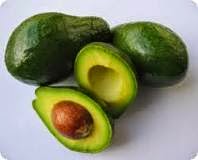
The avocado is a tree native to Central America classified in the flowering plant family with cinnamon, camphor, and bay laurel.  The avocado is also called the alligator pear.  The avocado is a climacteric fruit like the banana.  This means it matures on the tree, but ripens off the tree.  The fruit is actually a large berry with a single seed.  Generally the avocado is served raw. 
The avocado has a much higher fat content than most other fruits, mostly monosaturated fat.  Consequently,  it is a staple in areas where access to other fatty foods is limited. It is also popular in vegetarian cuisine as a meat substitute.  The most common varieties of avocados are Bacon, Fuerte, Gwen, Hass, Pinkerton, Reed, and Zutano.   The Hass variety is the most common  avocado grown.  It produces fruit all year long and accounts for 80%  of cultivated avocados in the world.   Mexico is the world's largest producer and exporter of avocados.  The main  growing areas for avocados in the U. S. are California and Florida.  Avocados are known for their silky, creamy texture and rich flavor which some describe as "nutty" or "nut like".

History:

The oldest evidence of avocados was found in a cave in Mexico that dates back to around 10000 BC.   Avocados grow  well in warm climates.   It is common knowledge that Mexican and southwestern cooking include a lot of avocados, but they have actually become very popular in the Far East.  The French eat lots of avocados.  Europeans discovered avocados when Cortez arrived in the Americas in the sixteenth century.

My Story:

We did not eat avocados when I was growing up.  My earliest remembrance of an avocado is when in my twenties I was diagnosed with having a bad gall bladder.  The doctor told me to avoid fatty foods and avocados.  That didn't bother me too much,  because I didn't eat avocados anyway.   The reason  for avoiding avocados was of course because of their high fat content.

Nutrition:

The avocado contains 20 essential nutrients. About 75% of the avocados calories come from fat, mostly monosaturated fat.  Avocados are also high in potassium, rich in B vitamins, and also vitamin E and vitamin K.   In one preliminary study a diet high in avocados lowered cholesterol in just 7 days.  Avocados are  a good source of pantothenic acid, dietary fiber, vitamin K, copper, folate, vitamin B6, potassium, vitamin A, and vitamin C.


Health Benefits:

In addition to conventional nutrienets avocados offer a wide range of phytonutrients that are related to their unusual fat quality.   Avocado is believed to provide helth benefits in the area of blood sugar control, insulin regulation, satiety, weight management, and decreasted overall risk o0f unwanted inflammation.

Selecting and Storing:

Select avocados that are slightly soft with no dark sunken spots or cracks.  A firm avocado will ripen in a paper bag or in a fruit bowl at room temperature.  Avocados should not be put in the refrigerator until they are ripe.  To peel, cut the avocado lengthwise around the pit and rotate the two halves in opposite directions.   Gently put a spoon under the tip of the pit and it should easily come out.   Once cut,  the avocado's flesh will naturally start to turn brown from exposure to air.  To prevent this natural darkening sprinkle the avocado flesh with lemon juice.  Keep the cut avocado in the refrigerator.

Growing Avocados:

Avocados are usually grown indoors in pits.  To start your own plant remove the pit from an unrefrigerated ripe avocado.  Then stab the pit with 3 or 4 toothpicks about one third of the way up.  The pit should then be placed in a jar or vase with tepid water.  In 4 to 6 weeks the pit should split and yield roots and a sprout.  Once the stem has grown a few inches it should be place in a pot with soil  and watered every few days.  Repot the plant as it outgrows it current pot.


Enjoying Avocados:

To enjoy use chopped avocados as a garnish for black bean soup.   Add avocado to a creamy tofu-based dressing recipe for extra richness and a beautiful color.  Spread ripe avocado on bread as a healthy replacement for mayonnaise.  Mix chopped avocado, onions, tomatoes, cilantro, lime juice and seasonings for a rich tasting twist on traditional guacamole.

So..... Eat up!  Enjoy!  I'll show you how.


Simple but Good:


Traditional Guacamole:

3 avocados
1 lime, juiced
1 tsp salt
1/2 cup diced onion
3 TBS chopped fresh cilantro
2 roma (plum) tomatoes, diced
1 tsp minced garlic
1 pinch cayene pepper (optional)

In a medium bowl mash together the avocados, lime juice, and salt.  Mix in the onion, cilantro, tomatoes, garlic.  Stir in cayene pepper.  For best flavor refrigerate for 1 hour.


(adsbygoogle = window.adsbygoogle || []).push({});

Monday, February 18, 2013

Avocados

Avocados:


The avocado is a tree native to Central America classified in the flowering plant family with cinnamon, camphor, and bay laurel.  The avocado is also called the alligator pear.  The avocado is a climacteric fruit like the banana.  This means it matures on the tree, but ripens off the tree.  The fruit is actually a large berry with a single seed.

The oldest evidence of avocados was found in a cave in Mexico that dates back to around 10000 BC.   Avocados grow  well in warm climates.   It is common knowledge that Mexican and southwestern cooking include a lot of avocados, but they have actually become very popular in the Far East.  The French eat lots of avocados.  Europeans discovered avocados when Cortez arrived in the Americas in the sixteenth century.

We did not eat avocados when I was growing up.  My earliest remembrance of an avocado is when in my twenties I was diagnosed with having a bad gall bladder.  The doctor told me to avoid fatty foods and avocados.  That didn't bother me too much,  because I didn't eat avocados anyway.   The reason  for avoiding avocados was of course because of their high fat content. 

The avocado has a much higher fat content than most other fruits, mostly monosaturated fat.  Consequently,  it is a staple in areas where access to other fatty foods is limited. It is also popular in vegetarian cuisine as a meat substitute.   The most common varieties of avocados are Bacon, Fuerte, Gwen, Hass, Pinkerton, Reed, and Zutano.   The Hass variety is the most common  avocado grown.  It produces fruit all year long and accounts for 80%  of cultivated avocados in the world.   The main  growing area for avocados in the U. S. are California and Florida.

Generally the avocado is served raw.  It contains 20 essential nutrients. About 75% of the avocados calories come from fat, most monosaturated fat.  Avocados are also high in potassium, rich in B vitamins, and also vitamin E and vitamin K.   In one preliminary study a diet high in avocados lowered cholesterol in just 7 days.

Select avocados that are slightly soft with no dark sunken spots or cracks.  A firm avocado will ripen in a paper bag or in a fruit bowl at room temperature.  Avocados should not be put in the refrigerator until they are ripe.  To peel, cut the avocado lengthwise around the pit and rotate the two halves in opposite directions.   Gently put a spoon under the tip of the pit and it should easily come out.   Once cut,  the avocado's flesh will naturally start to turn brown from exposure to air.  To prevent this natural darkening sprinkle the avocado flesh with lemon juice.

Avocados are usually grown indoors in pits.  To start your own plant remove the pit from an unrefrigerated ripe avocado.  Then stab the pit with 3 or 4 toothpicks about one third of the way up.  The pit should then be placed in a jar or vase with tepid water.  In 4 to 6 weeks the pit should split and yield roots and a sprout.  Once the stem has grown a few inches it should be place in a pot with soil  and watered every few days.  Repot the plant as it outgrows it current pot.

To enjoy use chopped avocados as a garnish for black bean soup.   Add avocado to a creamy tofu-based dressing recipe for extra richness and a beautiful color.  Spread ripe avocado on bread as a healthy replacement for mayonnaise.  Mix chopped avocado, onions, tomatoes, cilantro, lime juice and seasonings for a rich tasting twist on traditional guacamole.

So eat up!  Enjoy!  I'll show you how.

Sunday, December 2, 2018

Anti-inflammatory Foods Primer

The information in this post comes mainly from research done at the University of South Carolina.


Anti-inflammatory Foods Primer

Chronic inflammation has been linked to cancer, heart disease, diabetes, arthritis, depression, and Alzheimer's.  Carbohydrates, fat, and cholesterol are among the food components most likely to encourage inflammation.

Here are foods that cause inflammation:

  • Refined carbohydrates - white bread, pastries, pasta
  • French fries - and other fried foods 
  • Soda - and other sugar sweetened beverages
  • Red meat - burgers, steaks, processed meats
  • Margarine - shortening and lard
Anti-inflammatory Foods:

Magnesium, beta-carotene, vitamins A, B6, C, D, and E, fiber, omega-3 fatty acids, flavonoids, turmeric, and tea are the strongest anti-inflammatories.

Here are foods that are anti-inflammatory:


  • Chia Seeds
  • Wild fish (salmon)
  • Turmeric
  • Ginger                         
                                                                 
  • Garlic 
  • Broccoli
  • Dark Leafy green (Cruciferous-spinach, kale, collards)
  • Extra Virgin Olive Oil
  • Grapes
  • Flax seeds          
  • Papaya
  • Apple peel
  • Blueberries
  • Tea (esp. green)
  • Sweet Potatoes
  • Cinnamon
  • Greens (spinach, kale, collards, chard)
  • Asian mushrooms
  • Nuts (walnuts, almonds, cashews)
  • Avocado             
  • Hemp seeds
  • Cayene pepper                          
  • Kelp
  • Tart cherries
Full descriptions of most of these foods can be found in articles of this blog.  Just put the item in the search box in the upper left corner of the page and click to be taken to the artcle.

If you found this post helpful, please share it.

So eat up!  Enjoy!  Food can also be medicine.

Saturday, March 30, 2019

Foods That Help You Live Longer

Foods That Help You Live Longer:


These are Foods that are scientifically proven to help you live longer and healthier lives.  The information is from a video posted by Chiropractor Dr. Alan Mandell.
The foods listed foods are anti-inflammatory, high in antioxidants, high in fiber, and also high in Omega 3 fatty acids.  I believe you should include as many of these foods as you can in your diet for a longer and healthier life.  I have included links to posts from this blog next to most of the foods. 

1.  Leafy Greens (spinach, kale, arugula) 

2.  Extra Virgin Olive Oil

3.  Walnuts


10.  Hot Peppers

11.  Salmon

12.  Dark Chocolate (more than 75% cacao) https://fruitandveggiesense.blogspot.com/search?q=chocolate


                          https://fruitandveggiesense.blogspot.com/search?q=mint


18.  Yogurt  


</

Thursday, June 25, 2015

Shallots

Shallots:

About:

Shallots (Allium cepa) are members of the lily family along with more than 300 varieties of onion and onion-like vegetables. that include leeks, scallions, and garlic.  The shallot is a small bulb, roughly the size of a small head of garlic, that sometimes separates into 2 or 3 cloves when you remove the outer skin.
Shallots are favored for their mild onion flavor.  They can be used in the same manner as the onion.

Varieties:

There are 2 types of shallot:  The Jersey of "false" shallot, which is the larger of the two, and "true" shallots which have a more subtle flavor.  Fresh green shallots are available in the spring, and dry shallots, which have a dry skin and a moist flesh are available year round.   Shallots are graded by size into small, medium, and jumbo, which has the least flavor.
The most commonly cultivated shallot is the pink shallot, which has a pinkish papery skin and an oblong shape.  There is also a copper yellow shallot, which has a yellowish skin and a more elongated shape.  Top quality shallots are grown in the Brittany region of France, and in other European countries.  Canada, and  U.S. crops are also grown.

History: 

Shallots probably originated in Central or Southeastern Asia travelling from there to India and the Eastern  Mediterranean.  Some believe the word "shallot" derives from a Middle Eastern city named Ashkelon or Ascalon.  The ancient Greeks grew shallots and traded them to other countries, and the Romans prized them as a food and an aphrodisiac.  

Uses:

Shallots add a subtle flavor and aroma to casseroles, pasta dishes, stews, and soups.   Shallots are used whole, slivered, or minced.  Minced shallots can be added to a vinaigrette to dress tossed salad or avocado.  Shallots are excellent in sauces. 

Health Benefits:

Shallots appear to contain more flavonoids and phenols than other members of the onion genus. 

Season:

Shallots are available year round thanks to cold storage.  Like other onions, they have a more delicate flavor in the spring and a stronger flavor in the fall. 

Selecting and Storing:

Shallots should be firm with dry, papery skin.  Avoid shallots that show sprouts (green shoots) or dark spots.  Keep shallots in a cool, dry, and dark place.  They will keep for about a month.  In the refrigerator use then in 2 weeks.   Once they are peeled or cut wrap shallots in plastic and refrigerate, or place in a jar and cover with olive oil and refrigerate.  You can used the aromatic oil afterwards in a salad dressing.

So..... Eat up!  Enjoy!  I'll show you how.


Simple but Good:

Roasted Potatoes with Shallots


6 large shallots, peeled and halved lengthwise
3 TBS extra virgin olive oil, divided in half
1 1/2 pounds Yukon Gold potatoes, peeled and quartered
Salt and Pepper

Preheat oven to 400 degrees F.  with rack in lowest position
Toss halved shallots with 1 1/2 TBS olive oil, 1/2 tsp salt and 1/4 tsp pepper in a 13 by 9 inch baking pan
Roast stirring occaisionally until shallots are golden (about 30 minutes).
Toss potatoes with remaining 1 1/2 TBS of olive oil, 1/2 tsp salt, and 1/4 tsp pepper in a bowl, then add to the shallots.
Roast turning occasionally until vegetables are tender and potatoes are crusty (about 40 - 50 minutes).

Please share our blog with your friends


(adsbygoogle = window.adsbygoogle || []).push({});
amzn_assoc_ad_type = "contextual"; amzn_assoc_tracking_id = "fruita0f-20"; amzn_assoc_marketplace = "amazon"; amzn_assoc_region = "US"; amzn_assoc_placement = "OZL7KATSDNEQZ7CN"; amzn_assoc_linkid = "OZL7KATSDNEQZ7CN"; amzn_assoc_emphasize_categories = ""; amzn_assoc_fallback_products = ""; amzn_assoc_width = "300"; amzn_assoc_height = "250";