Showing posts sorted by date for query sweet potatoes. Sort by relevance Show all posts

Saturday, March 30, 2019

Foods That Help You Live Longer

Foods That Help You Live Longer:


These are Foods that are scientifically proven to help you live longer and healthier lives.  The information is from a video posted by Chiropractor Dr. Alan Mandell.
The foods listed foods are anti-inflammatory, high in antioxidants, high in fiber, and also high in Omega 3 fatty acids.  I believe you should include as many of these foods as you can in your diet for a longer and healthier life.  I have included links to posts from this blog next to most of the foods. 

1.  Leafy Greens (spinach, kale, arugula) 

2.  Extra Virgin Olive Oil

3.  Walnuts


10.  Hot Peppers

11.  Salmon

12.  Dark Chocolate (more than 75% cacao) https://fruitandveggiesense.blogspot.com/search?q=chocolate


                          https://fruitandveggiesense.blogspot.com/search?q=mint


18.  Yogurt  


</

Sunday, December 2, 2018

Anti-inflammatory Foods Primer

The information in this post comes mainly from research done at the University of South Carolina.


Anti-inflammatory Foods Primer

Chronic inflammation has been linked to cancer, heart disease, diabetes, arthritis, depression, and Alzheimer's.  Carbohydrates, fat, and cholesterol are among the food components most likely to encourage inflammation.

Here are foods that cause inflammation:

  • Refined carbohydrates - white bread, pastries, pasta
  • French fries - and other fried foods 
  • Soda - and other sugar sweetened beverages
  • Red meat - burgers, steaks, processed meats
  • Margarine - shortening and lard
Anti-inflammatory Foods:

Magnesium, beta-carotene, vitamins A, B6, C, D, and E, fiber, omega-3 fatty acids, flavonoids, turmeric, and tea are the strongest anti-inflammatories.

Here are foods that are anti-inflammatory:


  • Chia Seeds
  • Wild fish (salmon)
  • Turmeric
  • Ginger                         
                                                                 
  • Garlic 
  • Broccoli
  • Dark Leafy green (Cruciferous-spinach, kale, collards)
  • Extra Virgin Olive Oil
  • Grapes
  • Flax seeds          
  • Papaya
  • Apple peel
  • Blueberries
  • Tea (esp. green)
  • Sweet Potatoes
  • Cinnamon
  • Greens (spinach, kale, collards, chard)
  • Asian mushrooms
  • Nuts (walnuts, almonds, cashews)
  • Avocado             
  • Hemp seeds
  • Cayene pepper                          
  • Kelp
  • Tart cherries
Full descriptions of most of these foods can be found in articles of this blog.  Just put the item in the search box in the upper left corner of the page and click to be taken to the artcle.

If you found this post helpful, please share it.

So eat up!  Enjoy!  Food can also be medicine.

Wednesday, August 15, 2018

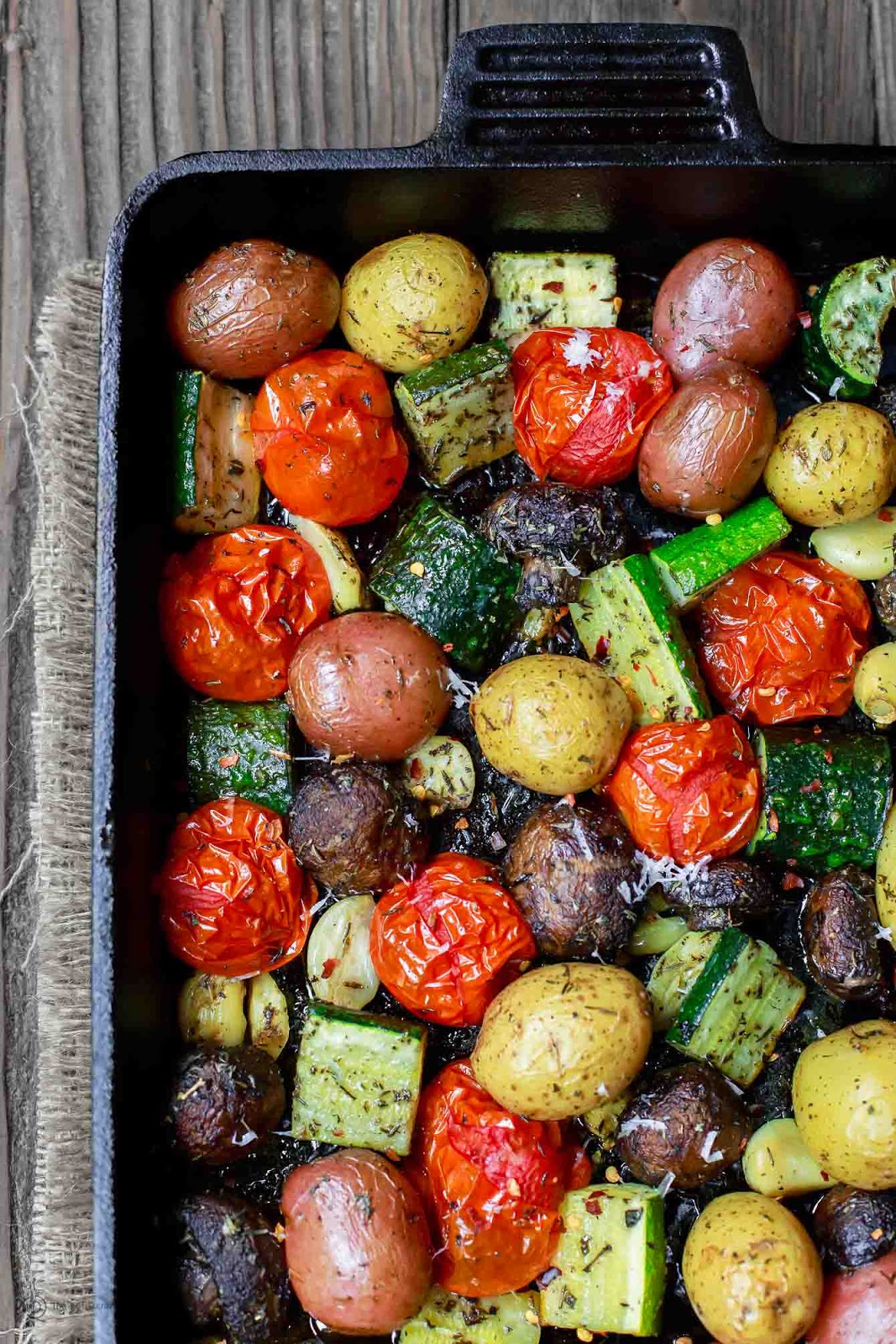
How to Roast Vegetables

How to Roast Vegetables:

My favorite wayt  to prepare vegetables is to roast them. 

Here's how:

  1. Preheat oven to 400 degrees F.
  2. Chop into pieces about 2 inches square
  3. Toss chopped vegetables in olive oil
  4. Spread evely over parchment paper covered baking sheet


 Roasting Times: 


Mushrooms
Summer Squash                           10 -15 minutes
Asparagus


Brussels Sprouts
Tomatoes                                      15 - 20 minutes


Bell Peppers
Onion
Eggplant                                      20 - 25 minuttes
Carrots


Cauliflower
Broccoli
Sweet Potatoes                           25 - 30 minutes
Butternut Squash
Potatoes


Beets                                         35 - 40 minutes

Thursday, January 14, 2016

Red Potatoes


Red Potatoes:

About:


The potato is a starchy tuberous crop.   It is the world's fourth largest crop following rice, wheat, and maize.   There are about 5000 potato varieties worldwide.   The potato was first domesticated  in the region of modern day Peru and extreme northwestern Bolivia between 8000 and 5000 BCE.   What  we call sweet potatoes today actually are members of another family of plants and the yam is also different from the sweet potato.
The red potato is one of the types of potatoes.  There are several varieties of the red potato.  The red potato  known  as the Dakota Chief is a red skinned early crop potato variety originally bred in the U.S. and sold in the U.S., Canada, Australia, Algeria, the Philippines, Venezuela, and Urguay.  It is also known as the Red Pontiac potato.  Other red varieties include the Red La Soda, Red Norland, and Rooster potato.


My Story:

One of my first jobs in the grocery business was to remove eyes from potatoes.  It was at my grandfather's store where the potatoes would come in fifty pound bags.  If they were around a little too long the potatoes would start to sprout.  I would be assigned to "knock" the eyes off the potatoes to prepare them for display.  I was ten years old at the time, but many years later as a supermarket produce manager I was still knocking eyes off the potatoes when necessary.

Uses:

The red potato can be used in recipes for baking, boiling, mashing, roasting, or in salads, and can be cooked in the microwave, and also sauteed or in soups.  Red potatoes may be cooked with the skins on and should be scrubbed and rinsed before preparation.   Because of their waxy texture, the flesh of the red potato stays firm through the cooking process.  Their thin yet vibrant red skin adds appealing color and texture to side dishes and salads.

Nutrition in Red Potatoes

Nutrition:

A medium red skinned potasto supplies 34 grams of carbohydratye.  Dietary fiber accounts for 3 of these grams.  Fiber helps regulate digestion, prevents constipation and diarrhea, may lower cholesterol, and blood sugar, and helps you feel full after eating.  The majority of the rest of the carbohydrates in red potatoes come from starches.  
Red potatoes also provide a variety of vitamins including vitamin C, vitamin B6, niacin, and folate.  Red potatoes provide minerals including magnesium, copper, phosphorus, and manganese.  It also provides a good source of potassium.


Season:

Red skinned potatoes are mostly available in the late summer and early fall. 


Selecting and Storing:

Potatoes should be firm with relatively smooth skin and good color.   Look for only a few eyes  with no cuts, dark or soft spots, and no wrinkled or wilted skin.   Green skin indicates the potato has been exposed to light.  Cut away the green and knock off the eyes when preparing.   Potatoes like cool temps (45 to 50 degreesF.  Refrigeration, however, can turn starch into sugar  and may darken the potatoes when cooked.  Potatoes are best kept in the coolest, nonrefrigerated part of the house, away from light  and well ventilated.


So..... Eat up!  Enjoy!  I'll show you how.


Simple but Good:

Garlic Red Potatoes

Garlic Roasted Potatoes

2 lbs. red potatoes, quartered
1/4 cup butter, melted
2 tsp garlic, minced
1 tsp salt
1 lemon, juiced 
1 TBS Parmesan cheese

Pre heat oven to 350 degrees F. Place potatoes in 8in. by 8 inch baking dish.
In a small bowl combine melted butter, garlic, salt, and lemon juice.  Pour over the potatoes, and stir to coat.  Sprinkle Parmesan cheese over the potatoes.
Bake covered in preheated oven for 30 minutes.  Uncover and bake an additional 10 minutes or until golden brown.

amzn_assoc_ad_type = "contextual"; amzn_assoc_tracking_id = "fruita0f-20"; amzn_assoc_marketplace = "amazon"; amzn_assoc_region = "US"; amzn_assoc_placement = "OZL7KATSDNEQZ7CN"; amzn_assoc_linkid = "OZL7KATSDNEQZ7CN"; amzn_assoc_emphasize_categories = ""; amzn_assoc_fallback_products = ""; amzn_assoc_width = "300"; amzn_assoc_height = "250";

Tuesday, October 27, 2015

Fall Fruits and Vegetablesfa


Fall Fruits and Vegetables:

 Buy fresh fruits and vegetables in season for best quality and price.


 What to look for:

Here are the vegetables that are fresh in season during the fall:

Acorn Squash                                                   Endive
Arugula                                                            Hot Peppers
Belgian Endive                                                Jerusalem Artichokes
Broccoli                                                           Jicama
Brussels Sprouts                                              Kale
Butter (Bibb) Lettuce                                      Kohlrabi
Buttercup Squash                                            Pumpkin
Butternut Squash                                             Radicchio
Cauliflower                                                      Sweet Potatoes
Daikon Radish                                                 Swiss Chard
                                                                         Winter Squash


Here are the fruits that are fresh in season during the fall:

Asian Pears                                                       Kumquats
Cape Gooseberries                                            Passion Fruit
Cranberries                                                        Pears
Grapes                                                               Pomegranite
Huckleberries                                                    Quince


So..... Eat up!  Enjoy!  I'll show you how.

(adsbygoogle = window.adsbygoogle || []).push({});
amzn_assoc_ad_type = "contextual"; amzn_assoc_tracking_id = "fruita0f-20"; amzn_assoc_marketplace = "amazon"; amzn_assoc_region = "US"; amzn_assoc_placement = "OZL7KATSDNEQZ7CN"; amzn_assoc_linkid = "OZL7KATSDNEQZ7CN"; amzn_assoc_emphasize_categories = ""; amzn_assoc_fallback_products = ""; amzn_assoc_width = "300"; amzn_assoc_height = "250";

Monday, October 26, 2015

Yams and Sweet Potatoes

Yams and Sweet Potatoes:

About:

Sweet potatoes and yams are completely different foods belonging to different plant families.   In most U.S. grocery stores you should assume you are purchasing  sweet potatoes, even if the sign says, "yams".  Government agencies have allowed the two terms to be used somewhat interchangeably on labeling.  The U.S.D.A.requires all sweet potatoes labeled as yams to be also labeled sweet potatoes.
 Sweet potatoes and yams both come in a variety of colors.  It is possible to find sweet potatoes and yams that look reasonably alike in terms of size, skin color, and flesh color.  Sweet potatoes are much more available in the U.S. than yams.  Yams are not as sweet as sweet potatoes.  They are usually longer and have a very different nutritional profile including not being as concentrated in carotenoid phytonutrients.   The sweet potato is botanically very distinct from the genuine yam, which is native to Africa and Asia, and belongs to a different botanical family.  The sweet potato's large starchy, sweet tasting tuberous roots are, of course, a root vegetable.  The young leaves and shoots are sometimes eaten as greens.


History:

 The origin and domestication of sweet potatoes is thought to be in either Central America or South America.  In Central America sweet potatoes were domesticated at least 5000 years ago.  In South America sweet potato remnants dating back as far as 8000 BC have been found.    Today sweet potatoes are cultivated throughout tropical and warm temperature regions, wherever there is sufficient water to support growth. Sweet potatoes have been an important part of the diet in the U.S. for most of its history, especially in the southeast.   The sweet potato is North Carolina's state vegetable.   

My Story:

My father used to tell how, when he was a boy, he would make what he called a "Mickey" .  He would get an empty tin can and poke holes in it.  Then he would attach a wire handle to the top.  A lit piece of charcoal was then put in the can and then a sweet potato.  By swinging the can around by the handle he would fan the charcoal and cook the sweet potato.    It sounded fun, but the thing was I never cared for sweet potatoes as a kid.   I acquired the taste later in life.   My trick was when working in the supermarket in the evening by myself  I would use the hot plate on the wrapping machine to cook broken pieces of sweet potato that would otherwise be discarded. 

Health Benefits:

Besides simple starches, raw sweet potatoes are rich in complex carbohydrates, dietary fiber, and beta-carotene, while having moderate contents of other micronutrients including vitamins B5, B6, manganese and potassium.  When baked small changes in micronutrient contenmt occur to include higher content of vitamin C and increase in polyphenol levels.   Anthocyanins and other color related pigments in sweet potatoes are valuable for their anti-inflammatory health benefits.   Sweet potatoes have the ability to improve blood sugar regulation - even in persons with type 2 diabetes.   Boiled or steamed sweet potatoes can carry a very reasonable glycemic index.  Recent research has shown extracts from sweet potatoes can significantly increase blood levels of adiponectin, which is an important modifier of insulin metabolism.

Using:

Try sweet potatoes  boiled, roasted, pure'ed, steamed, baked or grilled.  Add to soups and stews or grill and place on top of leafy greens. 


Season:

Sweet potatoes  are availble year round in the store fresh and in cans.

Selecting and Storing:

  Avoid fresh sweet potatoes in June and July as they have been in storage for almost a year.  Choose sweet potatoes that are firm and do not have cracks, bruises of soft spots.   Avoid those that are stored in the refrigerated case as cold negatively alters their flavor.  Sweet potatoes should be stored in a cool, dark and well ventilated place  where they will keep fresh for up to 20 days. 

So...... Eat up!  Enjoy!  I'll show you how.

Simple but good:

Sweet and Spicy Sweet Potatoes

2 large sweet potatoes peeled and cubed
3 tablespoons olive oil
2 tablespoons packed brown sugar
1 1/2 tablespoons paprika
1/2 teaspoon black pepper
1/2 teaspoon onion powder
1/2 teaspoon garlic powder 
1/2 teaspoon poultry seasoning
1/2 teaspoon chili powder
1 pinch cayene pepper

Preheat oven to 425 degrees F.  Place sweet potato chunks into a large mixing bowl.  Drizzle olive oil, then sprinkle other ingredients over the top.  Toss to coat.  Spread on a baking sheet.
Bake for 15 minutes, then turn over with a spatula and continue baking until golden and tender, 10 - 15 minutes more.

(adsbygoogle = window.adsbygoogle || []).push({});
amzn_assoc_ad_type = "contextual"; amzn_assoc_tracking_id = "fruita0f-20"; amzn_assoc_marketplace = "amazon"; amzn_assoc_region = "US"; amzn_assoc_placement = "OZL7KATSDNEQZ7CN"; amzn_assoc_linkid = "OZL7KATSDNEQZ7CN"; amzn_assoc_emphasize_categories = ""; amzn_assoc_fallback_products = ""; amzn_assoc_width = "300"; amzn_assoc_height = "250";

Thursday, September 17, 2015

Sage

Sage:

About:

Sage (Salvia officinalis) is a small evergreen sub shrub of the mint family used as a culinary herb and also medicinally.  It is native to the Mediterranean.  There are over  500 varieties of sage, most are medicinally useful.  Sage leaves are grayish green in color with a silvery bloom color.  Sage has a savory slightly peppery flavor.  It appears in many European cuisines notably Italian, Balkan and Middle Eastern.  In Britain sage has been listed as one of the essential herbs along with parsley and thyme.   In 2001 sage was named "Herb of the Year" by the International Herb Association.

History:

The Greeks and Romans  were said to have highly prized the many healing properties of sage.  The Romans treated sage as sacred and created a special ceremony for gathering it.   Arab physicians in the 10th century believed that sage promoted immortality.  Europeans of the 14th century used sage to protect themselves from witchcraft.  In China in the 17th century sage was prized for the delicious tea that it makes.  Chinese were said to trade 3 cases of tea leaves for 1 case of sage leaves.


Uses:

Culinary:

Sage is traditionally used to flavor meats, poultry, and cheese dishes.  New potatoes are also excellent roasted with a handful of fresh sage leaves,  a little garlic and olive oil and salt and pepper to taste. 

Medicinal:

Analgesic,  Antibacterial,  Anti-cancer,  Anti fungal,  Antioxidant, Aromatic,  Astringent, Depurative,  Emmenagogue,  Nervine.

Season:

Sage is available year round. grown outside or in hothouses.  Sage is sold fresh, dried whole, or powdered

Selecting and Storing:

Sage is usually sold cut in bunches.  Look for fresh unwilted leaves that are on the green side, the older the leaf, the grayer it looks and the more likely it is to be bitter.  
Sage will keep a day or two if it is kept dry in an open plastic bag.

Quick Serving Ideas for Sage:

  • Mix cooked navy beans with olive oil , sage, and garlic and serve on bruschetta
  • Use sage as a seasoning for tomato sauce
  • Add fresh sage to omelets and frittatas
  • Sprinkle sage on top of pizza
  • Combine sage leaves with bell peppers, cucumber and sweet onions with plain yogurt as a salad

So..... Eat up!  Enjoy!  I'll show you how.

(adsbygoogle = window.adsbygoogle || []).push({});
amzn_assoc_ad_type = "contextual"; amzn_assoc_tracking_id = "fruita0f-20"; amzn_assoc_marketplace = "amazon"; amzn_assoc_region = "US"; amzn_assoc_placement = "OZL7KATSDNEQZ7CN"; amzn_assoc_linkid = "OZL7KATSDNEQZ7CN"; amzn_assoc_emphasize_categories = ""; amzn_assoc_fallback_products = ""; amzn_assoc_width = "300"; amzn_assoc_height = "250";

Friday, September 4, 2015

Dill


Dill:

About:

Dill (Anethum graveolens) is an annual herb in the celery family.   Fresh dill has tiny feathery, bright green leaves, a tangy aroma, and a flavor that is more delicate and less pungent than dill seed.  Dill is unique in that both its leaves and seeds are used in seasoning.  Dill leaves are wispy and fern like and have a soft sweet taste.  Dried dill seeds are light brown and oval in shape with one flat side and one convex ridged side.  The seeds are similar in taste to caraway with a flavor that is aromatic, sweet, and citrusy, but also slightly bitter. 

History:

Dill's name comes from the old Norse wo0rd "dilla" which means "to lull".  This name reflects dill's traditional uses as both a carminative stomach soother, and an insomnia reliever.   Dill is native to Southern Russia, western Africa, and the Mediterranean region.  It has been used for its culinary and medicinal properties for millenia.  Dill was mentioned in the Bible and Egyptian writings.  It was popular in ancient Greek and Roman cultures, where it was considered a sign of wealth and was revered for its many healing properties.  Dill was used by Hippocrates, the father of medicine in a recipe to clean out the mouth.  Ancient soldiers would apply burnt dill seeds to their wounds to promote healing.  Today dill is a noted herb in the cuisines of Scandinavia, Central Europe, North Africa and the Russian Federation.

Uses:

Fresh dill leaves are excellent snipped into cucumber salad, chicken salad, potato salad, and deviled eggs.  Scatter snipped sprigs over sliced tomatoes or tossed with boiled new potatoes.  Use dill in marinades, and sauces, as a seasoning for fish and in omelette's.  Along with dill seed the leaves are a primary ingredient in pickles. 

Health Benefits:

Dill's unique health benefits come from 2 types of healing components: monoterpenes and flavonoids.  The activities of dill'[s volatile oils qualify it as a "chemo protective" food (much like parsley) that can neutralize particular types of carcinogens.  The volatile oils also prevent bacterial overgrowth.  Dill is a very good source of calcium, which is important for reducing bone loss.  Dill is also a good source of dietary fiber, and a good source of the minerals manganese, iron, and magnesium. 

Season:

Dill is available year round.  It is grown throughout the year, and in hothouses.

Selecting and Storing:

Dill is usually sold cut and bundled.  The feathery leaves should be bright green and sprightly, not dark or wet.  Fresh dill will keep a day or two , if it is kept dry (unwashed) in an unsealed plastic bag in the refrigerator.

So..... Eat up!  Enjoy!  I'll show you how.

(adsbygoogle = window.adsbygoogle || []).push({});
amzn_assoc_ad_type = "contextual"; amzn_assoc_tracking_id = "fruita0f-20"; amzn_assoc_marketplace = "amazon"; amzn_assoc_region = "US"; amzn_assoc_placement = "OZL7KATSDNEQZ7CN"; amzn_assoc_linkid = "OZL7KATSDNEQZ7CN"; amzn_assoc_emphasize_categories = ""; amzn_assoc_fallback_products = ""; amzn_assoc_width = "300"; amzn_assoc_height = "250";

Saturday, March 14, 2015

Ginger

Ginger:

About:

Ginger (Zingiber officinate) is a flowering plant in the family Zingiberaceae whose rhizome (underground stem), ginger root is widely used as a spice or a medicine.   Ginger produces a hot fragrant kitchen spice.  Young rhizomes are juicy and fleshy with a very mild taste.  Young rhizomes are juicy and fleshy with a very mild taste.   Mature ginger rhizomes are fibrous and nearly dry. 


History:

Ginger is indigenous to southern China, and was spread eventually to the Spice Islands, other parts of Asia, and subsequently to West Africa and the Caribbean.  Ginger was exported to Europe via India during the 1st century A.D. as a result of the lucrative spice trade.  India remains the largest produce of ginger today.  From 1585 Jamaican ginger was the first oriental spice to be grown in the New World and was imported back to Europe.  


Uses:

You ginger rhizomes are often pickled in vinegar or sherry as a snack or just cooked as an ingredient in many dishes.  They can also be steeped in boiling water to make ginger tea, to which honey is often added.  Sliced orange or lemon fruit may also be added.   Juice from the ginger root is often used as a spice in Indian recipes, and is a common ingredient in Chinese, Korean, Japanese, Vietnamese, and many south Asian cuisines for flavoring seafood, certain meats and vegetarian cuisines.   


Health Benefits:

Ginger has a long history of being very effective in alleviating symptoms of gastrointestinal distress.  In herbal medicine ginger is regarded as am excellent carminative (a substance that promotes elimination of intestinal gas) and as an intestinal spasmolytic (relaxes and soothes the intestinal tract).  Modern research has revealed that ginger possesses numerous therapeutic properties including antioxidant effects, an ability to inhibit formation of inflammatory compounds and direct anti-inflammatory effects.  Ginger's anti-vomiting action has been shown useful in reducing nausea and vomiting during pregnancy.
Ginger has been shown to be very effective in preventing symptoms of motion sickness especially seasickness. One study showed ginger to be more effective than Dramamine, and over-the-counter and prescription for motion sickness.  
Gingerois, the main active ingredient in ginger may also inhibit the growth of human colorectal cancer cells.  Lab studies have shown that the active phytonutrients in ginger kill ovarian cancer cells by inducing programmed cell death and self-digestion. 
Ginger can help promote healthy sweating, which often helps fight colds and flu's.   Other uses include pain relief from muscle soreness and arthritis, menstrual pain, upper respiratory tract infections, cough and bronchitis.  It is sometimes used for chest pain, low back pain, and stomach pain.

Season:

Ginger is available year round.

Selecting and Storing:

Wherever possible choose fresh ginger over dried.  Select firm, smooth, and free from mold roots.  Mature ginger is the more widely available type.  It has a tougher skin and requires peeling.  Young ginger is usually only available in Asian markets, but does not need to be peeled.  Ginger is also available crystallized, candied, and pickled.
Fresh unpeeled ginger can be stored in the refrigerator for up to 3 weeks.  Unpeeled ginger stored in the freezer will keep for up to 6 months.  

So..... Eat up!  Enjoy!  I'll show you how.


Ways to use Ginger:

  • To make a spicy lemonade, combine freshly grated ginger with lemon juice, cane juice or honey, and water.
  • To enhance a rice side, sprinkle grated ginger, sesame seeds and nori strips.
  • To make a great ginger salad dressing, combine ginger, soy sauce, olive oil, and garlic.
  • To spice up your vegetables, add freshly minced ginger.
  • To tweak your sweet potatoes,  add ginger and orange juice and puree. 

(adsbygoogle = window.adsbygoogle || []).push({});
Introducing Prime Pantry - Everyday Essentials Delivered to You Shop Amazon - New Grocery Restaurant & Bulk Food Store Shop Amazon - New Grocery Restaurant & Bulk Food Store (adsbygoogle = window.adsbygoogle || []).push({});