Saturday, February 6, 2021

Romano Pole Beans


Romano Pole  Beans:

Romano beans, sometimes called the Queen of Snap Beans, or Pole beans, are also sold as Italian beans.  They are flat, wide, and flavorful.  The variety ranges in size from 5 to 7 inches.  While small beans are very tender, larger ones have more of a developed bean inside and are more flavorful with a sweet, nbutty taste.  They come in green, yellow, and purple.  

Romano beans originated in Italy, and make a great substitute for green beans in any recipe.  They are legumes.   They are considered ripe when they make a crisp snap when broken  in half, and have a mild flavor and a tender texture.  These beans are often braised with other summer vegetables and eaten as a side dish, or can be added to soups, stews, stir fries, and an assortment of other dishes. 


Look for fresh clean beans that are tender, crisp, and well shaped.  Wash beans in water before refrigeration.  Beans will keep for several days in a plastic container, but are best when used immediately.  

They can be eaten raw or cooked.  To cook  snap  or trim off ends and rinse the pods to remove any dirt.  These beans can be cooked lightly to retain their crunchy texture or cooked until they are extremely tender.  Overcooking will make them mushy.  These legumes can also be pickeled.


Wednesday, November 18, 2020

Celeriac (Celery Root)


Celeriac (Celery Root):

Celeriac (Apium graveolins var. rapceum) is also known as celery root, knob celery and turnip rooted celery.   It is a variety of celery cultivatedm for itsedible or hypocotyl and shoots.  Celeriac is like a root vegetable except it has a bulbous hypocotyl with many small roots.  The root is cultivated in Puerto Rico where it is sold in farmers's markets and supermarkets and is a traditional staple of the Puerto Rican kitchen.  Celiac, while previously not well known, is an increasingly popular vegetable with important vitamins and minerals that may offer impressive health benefits.

Celeriac originated in the Mediterranean and belongs to the same plant family as carrots.  It was actually mentioned by Homer in the Odyssey.   Celeriac is popular in Eastern and Northern European regions as a winter root vegetable and commonly used in salads, soups, casseroles and stews. 

The taste of cleriac resembles the upper part of a celery stem and can be eaten raw or cooked (baked, roaqsted, or boiled).  Peak nseaso0n fora Celeriac is September to April , but is generally available year-round.

Cleriac is high in fiber and a good source of vitamins B6, C, and K.  It also includes minerals such as phosphorus, potassiuym and manganese.  It is low in fat and calories.  Celeriac is packed with antioxidants - which are anti-inflammatory - working to fight harmful free radicals, thus protectin healthy cells from damage.  They may protect agains conditions heart disease, cancer, and Alzheimer's.  As a high fiber food iut can aid in digestion, metabolism, and bowel movements.   The phosphorus and vitamin K in celeriac are important for healthy bones.

Here are some serving suggestions:

Try it raw, sliced or grated, in salads, coleslaw, or French Celeriac Remoulade

Boil and mash as a substitute for potatoes or other root vegetables

Roast or bake like potatoes

Cook and blend it for soups, sauces, pies, and casseroles.

Ceriac boils in about 20 minutes and roasts in about 40 minutes.

Choose a medium size celeriac that is not hollow in its center to ensure optimal freshness and flavor.

Monday, August 31, 2020

Nectarines

 Nectarines:


The nectarine (Prunus persica var. nucipersica) is a smooth skinned peach of the family Rosaceae that is grown throughout the warmer temperate regions of both the Northern and Southern hemispheres.  It is a genetic variation of the common peach, and not a combination of a peach and plum as thought by some. 

The nectarine was likely domesticated in China more than 4,000 years ago.  Peach trees and nectarine trees are indistinguishable.  Both the peach and the nectarine can be freestone or clingstone.   Nectarines have red, yellow or white flesh.  They are commonly eaten fresh or cooked in conserves, jams, and pies.

Nectarines are great sources of beta-carotene, vitamin C, and lutein.  They enhance immunity, protect vision, and prevent numerous deadly diseases.  They help improve skin health.  Nectarines are rich in fiber.  Fiber aids digestion,  feeds probiotics in the gut, and fights several abdominal ailments including stomach and colon cancers.  The potassium in nectarines can help manage blood pressure levels.   Nectarines offer twice the amount of vitamin A and more vitamin C , and a lot more potassium than peaches. 

                                                                       Nectarine Blossom

Health Benefits of Nectarines:

Nectarines help prevent Cancer.  The quercetin and chlorogenic acid in nectarines were found to stall cancer cell proliferation.  The antioxidants can play a roll in preventing cancer.  The high fiber content in nectarines can,  generally,  help prevent several types of cancer

Nectartines have anti-diabetic properties.  According to Science Daily, a leading online science website, nectarines contain bioactive compounds that help prevent obesity related diabetes.  The phenolic compounds in nectarines have anti-diabetic properties.  Nectarines have a glycemic index of  43, which is on the lower end.  

Nectarines can aid in weight loss.  The fiber in nectarines is mostly soluble, which as per report by the Centers for Disease Control and Prevention can aid in healthy weight loss.   Soluble fiber also reduces bad cholesterol. 

Nectaries offer anti-oxidant defense.  Acording to a Spanish study, the phenols and flavonoids in nectarines  contribute to their anti-oxidant properties.

Nectarines regulate blood pressure levels.  The potassium in nectarines relax the walls of blood vessels.   People with kidney ailments should beware if they are on a potassium restricted diet.


So..........Eat nectarines.  They're good for you. 


Saturday, August 22, 2020

Healthy Seeds

 Healthy Seeds:

Seeds contain the materials that will develop into plants.  For this reason they are extremely nutritious.  Seeds  are a great source of fiber.  They contain healthy monounsaturated fats, polyunsaturated fats, and many important vitamins, minerals, and antioxidants.  When eaten as part of a healthy diet, seeds can help reduce blood sugars, cholesterol, and blood pressure.


Heare are six of the healthiest seeds you can eat.  Each has been covered separately in this blog:

Flax Seeds:

A one ounce (28 grams) serving of flax seeds contasins as wide mix of nutrients.  They are an excellent source of fiber, omega-3 fats, lignans, and other nutrients.  Best eaten ground because their fibrous outer shell can not be digested.  A lot of evidence shows they may reduce cholesterol, blood pressure and even the risk of cancer.

https://fruitandveggiesense.blogspot.com/search?q=flax+seeds


Chia Seeds:  

Chia seeds are a good source of omega-3 fats, and are effective at lowering blood sugar and reducing risk factors for heart disease.  Like flax seeds, chia seeds contain a number of important antioxidant polyphenols. A study of 20 people with type 2 diabetes found that eating 37 grams of chia seeds per day for 12 weeks reduced blood pressure and levels of inflammatory chemicals including C - reactive protein.  https://fruitandveggiesense.blogspot.com/search?q=chia+seeds

Hemp Seeds:

An excellent source of vegetarian protein, hemp seeds are a complete protein source meaning they contain all the essential amino acids that your body cannot make itself.  Hemp seed oil may help reduce symptoms of eczema and other chronic inflammatory conditions.

https://fruitandveggiesense.blogspot.com/search?q=hemp+seeds

Sesame Seeds:

A great source of lignans which may help improve sex hormone status for estrogen.  Sesame seeds may also help reduce inflammation and oxidative stress.

https://fruitandveggiesense.blogspot.com/search?q=sesame+seeds


Pumpkin Seeds:

Pumpkin seeds and pumpkin seed oil are good sources of monounsaturated and omega-6 fats, and may help improve heart health and symptoms of urinary disorders.

https://fruitandveggiesense.blogspot.com/search?q=pumpkin+seeds


Sunflower Seeds:

Contain high levels of both monounsaturated and omega-6 fats and may help reduce  inflammation and cholesterol levels.

https://fruitandveggiesense.blogspot.com/search?q=sunflower+seeds


Seeds are a great source of healthy fats, vegetarian protein, fiber, and antioxidant polyphenols.  They can help reduce the risk of certain diseases.  The lignans in certain seeds may help lower cholesterol and the risk of cancer.

Eat seeds out of hand.

Add seeds to salads, yogurt, oatmeal, and smoothies. 

So, be healthy !  Eat some seeds !

Please comment and Share. 

Friday, August 7, 2020

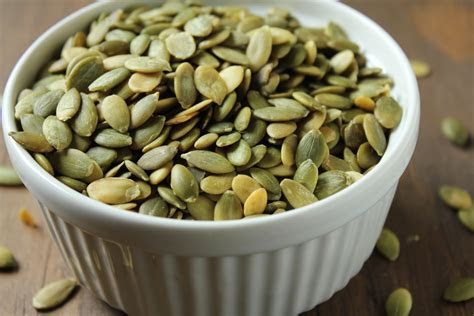
Pumpkin Seeds

Pumpkin Seeds:


Pumpkin Seeds:

Pumpkin seeds, also called "pepitas", Spanish for "little seeds of squash" ,  are full of valuable nutrients.  They are used commonly in Mexican food, and are often eaten as a healthful snack.   They can be eaten raw or roasted and salted or unsalted.  Most pumpkin seeds bought at the supermarket do not have shells.

                 
Nutrition:In a one ounce serving:Fiber:  1.7 grams                                               Manganese:  42% RDICarbs:  5 grams                                                 Magnesium:  37% RDIProtein:  7 grams                                               Iron:  23% RDIFat:  13 grams                                                    Zinc:  14% RDIVitamin K:  18% RDI                                        Copper:  19% RDIPhosphorus:  33%  RDI
Pumpkin Seeds are high in Antioxidants and can help reduce inflammation and protect your cells from harmful free radicals  and help protect against many diseases.Pumpkin seeds containessential amino acids such as tryptophan and glutamateDiets rich in pumpkin seeds have been associated with reduced risk of  stomach, breast, lung, prostate, and colon cancers.The magnesium if pumpkin seeds is needed for more than 600 chemical reactions in the body including: Controlling blood sugar; reducing heart disease risk; forming and maintaining healthy bones; regulationg blood sugar levels.Researchers have suggested that pumpkin seeds help protect against type 2 diabetes, or reduce its complications in other ways such as improving insulin regulation and protecting organs against the consequences of diabetes.Adding pumpkin seeds to your diet:  As an out of hand snack; sprinkle into salads, soups, cereals, cooked vegetables , and stir fries.  Add to smoothies and Greek yogurat and fruit.  Pumpkin seeds can be found readily in stores year round.  Hulled pumpkin seeds should be stored in air tight containers in the refrigerator to prevent deterioration.I love them !

Friday, July 3, 2020

Hemp Seeds

Hemp Seeds

Hemp seeds are produced from the hemp plan (Cannabis sativa L).  Hemp is commonly confused with marijuana, as it belongs to the same family.  Actually, the two plants are quite different.  The most notable difference is the level of THC (delta-9-tetrahydro cannabinol).  Hemp contains less than 1% of THC, which is a psychoactive drug.  Marijuana contains up to 20%  or more. 

Hemp plants are cultivated for industrial use and harvested for their fibers, seeds, oils, and meal.    Industrial hemp seeds are available in different forms.  They can be sterilized, toasted, roasted, or cracked.  They can be pressed into oil, or hulled into meal.  Hemp thrives nearly anywhere tolerating a variety or growing conditions.  It is rarely affected by pests or disease.   Hemp products include hemp seeds, hemp milki, hemp oil, hemp cheese substitutes, and hemp protein powder.  These products can be purchased at most health food stores.  

Hemp seeds major producers include Canada, France, and China.  Interestingly, both George Washington and Thomas Jefferson grew hemp in their gardens.  Ben Franklin produced hemp paper in his mill, and hemp paper was used for the Declaration of Independence.

Industrial hemp has many uses from paper and textiles to plastic and fuels.  It can be used in place of traditional paper from wood  and be recycled more times than paper made from wood.   Plastic made from hemp is bio-degradable.  

Hemp seeds can be used in many food products.   Hemp seed food products are considered more allergy free than many other seeds.  Hemp seeds contain 20 different varieties of amino acids including the 9 essential amino acids for sustaining good health.   Hemp seeds contain the necessary fatty acids known as "good fats".    Hemp seeds contain high amouts of protein and fiber, both soluble and insoluble.


According to the USDA 3 TBS of hemp seeds contain 116 calories and these nutrients: 
 
Protein - 9.47 grams
Carbohydrates - 2.60 grams
Fat - 1.2 grams 
Total fatty acids - 14.62 grams
Monounsaturated fatty acids - 1.62 grams
Polyunsaturated fat - 11.43 grams
Saturated fatty acids -  1.38 grams

Hemp seeds contain a variety of vitamins and minerals and are especially rich in vitamin E , magnesium, phosphorus, and potassium.   They are a good source of iron, zinc, and B vitamins including niacin, riboflavin, thiamine vitamin B6, and folate.   The amount of omega-3's in hemp seeds and the seeds' healthful omega-3 to omega-6 ratio can together help to reduce inflammmation.
Hemp seeds are a rich source of gama linolenic acid (GLA), a poly unsaturated fatty acid which may also have anti-inflammatory effects.  Reducing inflammation may help managesymtoms of chronic diseases such as metabolic sytndrom, type 2 diabetes, arhtritis, heart disease, and non-alcohol related fatty liver disease.

 
Ways to incorporate hemp seeds into the diet:
  • Sprinkling whole or ground seeds on  cereal or yogurt
  • Adding the seeds to smoothies
  • Baking with hemp seeds and other rich omega-3s
  • Making hemp milk at home using whole seeds
  • Sprinkling hemp seeds along with other seeds or nuts on a salad.

Monday, May 25, 2020

Lentils

Lentils:

The lentil (Lens culinaris) is an edible legume.   It is a bushy annual plant known for its lens-shaped seeds.   As a food crop, the majority of the world production of lentils  comes from Canada, India, the United States, and Turkey.  Lentils are the oldest legume and among the earliest crops domesticated in the Old World.  Carbonized remains of lentils have been found alongside human habitatikons dating back to 11,000BC in Greece.  The lentil is indigenous to Western and Central Asia. 

Lentils are cooked worldwide, most widespread throughout South Asia, the Mediterranean, and West Asia.  In India lentils are part of the everyday diet with either rice, or roti (a flatbread).  Lentils are used to prepare an inexpensive and nutricious soup all over Europe and North and South America.

There are several varieties of lentils.  Here are the most common ones:

Brown - Most widely eaten type.  Have an earthy flavor, hold their shape well during cooking, and                    are great in stews.

Puy - Come from the French region of Le Puy.  Similar in color, but one third the size of green lentils.
          They have a peppery taste

Green - Can vary in size.  Usually a cheaper alternative to Puy.

Yellow and Red - Are split and cooked quickly.  Have a somewhat sweet and nutty flavor.

Beluga - Tiny black lentils that look almost like caviar.  Great base for a warm salad.

Lentils are packed with B vitamins , magnesium, zinc , and potassium.  They are over 25% protein, and a great source of iron.
Lentils are rich in polyphenols, a category of health promoting phyto chemicals, such as procyanidine and flavonols, known  to have strong antioxidant, anti-inflammatory, and neuroprotective effects.  In the lab the polyphenols in lentils were able to stop cancer cell growth especially on the skin.
Lentils may protect the heart by supporting weight loss, preventing homo cysxteine accumulation and improving cholesterol and blood pressure levels.

Lentils contain certain antinutrients such as trypsin inhibitors and phytic acid which reduces the absorption of some nutrients.  Prior soaking and cooking lentils will help minimize these, but regardless you will still absorb the majority of your nutrients. The low levels of readily digestable starch and high levels of slowly digested starch make lentils a good choice for people with diabetes.

Lentil Nutrition:
1 cup of cooked lentils (198 grams) provides:

Calories :  230
Carbs:  39.9 grams
Protein:  17.9 grams
Fat:  0.8 grams
Fiber:  15.6 grams
Thiamine:  22%  RDI (Recommended Daily Intake)
Niacin:  15.6 grams
Vitamin B6:  18% RDI
Folate:  90% RDI
Pantotheric acid:  13%  RDI
Iron:  37% RDI
Magnesium:  18%  RDI
Phosphorus:  36%  RDI
Potassium:  21%  RDI
Zinc:  17%  RDI
Copper:  25%  RDI
Manganese:  49%  RDI

Lentils are easy and quick to cook.  While it is not necessary to soak overnight doing so will help reduce the levels of antinutrients.   Lentils should be rinsed thoroughly to remove any dirt, foreign matter or small stones.   Place the rinsed lentils in a pot and cover with water, add as pinch of salt.  Bring to a boil and simmer uncovered for 15 to 20 minutes.  They should be slightly crunchy or soft according to preference.  Once  boiled drain and rinse with cold water to stop cooking.  Lentils will last up to 5 days in the refrigerator.

Plain cooked lentils as well as lentil soup can be found in cans.

I have loved lentils sinse I was a little kid.  My grandmother, who lived downstairs from us in Brooklyn, New York used to make them.  I called them "my favorite fruit".


Tuesday, January 14, 2020

Apple Cider Vinegar


Apple Cider Vinegar: 

About:

Apple cider vinegar is a vinegar made from fermented apple juice.  It is made by crushing apples, then squeezing out the juice.  Bacteria and yeast are added to the liquid to start the alcoholic fermentation process, which converts the sugars to alcohol.  In a second fermentation step the alcohol is converted into vinegar by acetic acid forming bacteria.  Acetic acid is what gives vinegar its sour taste and smell.

Apple cider vinegar has a long history as a home remedy.  Records show apple juice has been fermented into vinegar well before 5000 B.C.   The "mother" of  apple cider vinegar is the cloud of  yeast and bacteria in the cider.  It is probiotic which means it may give your digestive system a boost.
The main substance in vinegar, acetic acid, can kill harmful bacteria or prevent them from multiplying.  It has a history of uses as a disinfectant, and natural preservative. 


Adverse Effects:

People with allergies to apples may experience adverse reactions to apple cider vinegar.  Topical use of  ACV (Apple Cider Vinegar) to treat skin diseases may cause burns.  The use of ACV may cause  prescription drugs, such as insulin and other diabetic drugs, heart disease drugs, diuretics, and laxatives to not work as well.   Because of high acidity in ACV  it can damage your teeth, hurt your throat, and upset your stomach.  Regular consumption of ACV may cause a drop in potassium that makes your nerves and muscles work.


Effectiveness:

While there are many studies showing effectiveness of ACV for various applications,  Web MD states that there is no high-quality clinical evidence that regular consumption of ACV helps maintain or loose body weight, or is effective in managing blood glucose or lipid levels.   Research continues, however, and many uses for ACV have been shown.  

Nutrition:  

Apple cider vinegar probably contains pectin, vitamins B1, B2, and B6; biotin, folic acid, niacin, pantothenic acid and vitamin C. 
It also contains small amounts of minerals: sodium, phosphorus; potassium; calcium, iron; magnesium.
ACV also contains significant quantities of acetic acid and citric acid. 

Uses:

ACV is used alone or with honey for weak bones (osteoporosis), weight loss, leg cramps, and pain, upset stomach, sore throats, sinus problems, high blood pressure, arthritis, to help rid the body of toxins, stimulate thinking, slow the aging process, regulate blood pressure, reduce cholesterol, and fight infection.
ACV has shown great promise in improving insulin sensitivity and helping lower blood sugar responses after meals.
Several animal studies have shown that vinegar can reduce blood triglycerides, cholesterol, and blood pressure.  This could lead to reduced risk of heart  disease. Some studies in test tubes and rats have shown that vinegar can slow growth of cancer cells and shrink tumors.
ACV has various non-health related uses like hair conditioning, skin care, dental care, pet use and as a cleaning agent.  Some people apply ACV to the skin for acne, as a skin toner, to soothe sunburn, for shingles, insect bites, and to prevent dandruff.  It is also used in the bath for vaginal infections.
Studies suggest that vinegar can increase feelings of fullness and help people eat less calories which leads to weight loss. 

Taking ACV:

 It is recommended to use organic, unfiltered apple cider vinegar with the "mother".

The best way to use apple cider vinegar is to incorporate it into your diet by using it in cooking - for salad dressing, home made mayonnaise, etc.

Many people dilute apple cider vinegar in and 8 ounce glass of water or tea.

The daily dosage of ACV is from 1 - 2 teaspoons to 1 - 2 tablespoons per day either in water or Incorporated in food. 

If you find this post helpful, please Share it.

Sunday, June 16, 2019

Pink Himalayan Salt


Pink Himalayan Salt:


About:

Pink Himalayan salt is a type of rock salt or halite from the Punjab region of Pakistan.  These minerals give the salt its pink color, near the foothills of the Himalayans.  Pink Himalayan  salt is chemically similar to table salt.  It contains 98% sodium chloride.  The rest of the salt consists of 84 minerals and trace elements including calcium, magnesium, potassium, copper, and iron.

Uses: 

This type of salt is used the same as table salt: in cooking, to season food, and to preserve food.   Blocks of pink salt sometimes become serving dishes, cooking surfaces, and cutting boards.  Some people use pink Himalayan salt in place of bath salts to improve skin conditions and sooth sore muscles.  It is possible to buy lamps, and candle holders made of pink Himalayan salt, which are claimed to reduce air pollutants.

About Sodium:

Sodium is an essential trace element found in salt.  It can support contracting and relaxing muscles, maintain proper fluid balance and prevent dehydration, send nervous system impulses, and prevent low blood pressure.   Recent research suggests that eating salt can reduce the risk of infection, and kill harmful bacteria.  .  One study on animals found that salt may have a positive effect on symptoms of depression. 
Amounts of Sodium in Salt:
1/4 teaspoon - 575 mg sodium
1/2 teaspoon - 1150 mg sodium
3/4 teaspoon - 1725 mg sodium
1  teaspoon - 2300 mg sodium

Dietary guidelines:  limit intake of sodium to less than 2.3 grams (2300mg, 1 teaspoon)

Here are serious health conditions linked to high sodium intake:
  • High blood pressure
  • Heart disease
  • Stroke
  • Liver damage
  • Osteoporosis
  • Kidney disease

Commonly Claimed Benefits of Pink Himalayan Salt:

  1. Improves respiratory diseases
  2. Balances your body"s pH
  3. Reduces signs of aging
  4. Improves sleep quality
  5. Regulates blood sugar
  6. Increases libido
There is actually no clear evidence to show that pink Himalayan salt provides more health benefits than regular table salt.  While pink Himalayan salt does contain several minerals not found in regular salt, these minerals are in very small quantities, and are unlikely to provide any health benefits.  
Pink Himalayan salt is a more natural salt  than table salt.  Table salt is usually heavily refined and mixed with anti-caking agents to prevent clumping, such as sodium alumnosilicate or magnesium carbonate.   Himalayan salt does not usually contain additives.

From Dr. Axe:


(adsbygoogle = window.adsbygoogle || []).push({});

amzn_assoc_ad_type = "contextual"; amzn_assoc_tracking_id = "fruita0f-20"; amzn_assoc_marketplace = "amazon"; amzn_assoc_region = "US"; amzn_assoc_placement = "OZL7KATSDNEQZ7CN"; amzn_assoc_linkid = "OZL7KATSDNEQZ7CN"; amzn_assoc_emphasize_categories = ""; amzn_assoc_fallback_products = ""; amzn_assoc_width = "300"; amzn_assoc_height = "250";

Saturday, June 1, 2019

Almonds

Almonds:

About:

While most people think of almonds as nuts, they are actually botonically seeds locked inside the almond fruit that grows on the almond tree.  Technically the almond fruit is a kind of drupe, rather than a nut.  It is actually a stone fruit, relataed to cherries, plums, and peaches.  

History:

Almonds were one of the first foods that humans domesticated.  Records exist from biblical times back to the Bronze age.  More than 80% of the world's almond production is from California.

Nutrition:

Nutritionally, almonds provide protein, antioxidants, healthy fat, fiber, vitamins, and minerals.  They are one of the most nutritious foods.

One ounce (a small handful) serving provides:

Fiber :  3.5 grams
Protein:  6 grams
Fat:  14 grams (9 of which are monounsaturated)
Vitamin E:  37% of the RDI
Manganese:  32% of the RDI
Magnesium: 20% of the RDI

Also contains amounts of copper, vitamin B2 (riboflavin), and phosphorus.

161 Calories
2.5 grams of digestible carbohydrates


 Health Benefits:
  1. Reduce heart attack risk: Those who consume nuts 5 times a week have a 50% reduction in heart attack risk.
  2. Lower bad cholesterol:  Almonds have a favorable effect on blood cholesterol levels.
  3. Protect artery walls from damage:  Flavonoids in almond skins work with vitamin E to reduce the risk of heart disease.
  4. Build strong bones and teeth:  Due to phosphorus.
  5. Provide healthy fats and aid in weight loss:  Those who ate nuts twice a weel were 31% less likely to gain weight. 
  6. Almonds lower the rise in blood sugar and insulin after meals.
  7. Provide good brain function:  Riboflavin and L-carnitine in almonds boost brain activity and may reduce the risk nof Alzheimer's
  8. Nourish the nervous system:  According to Ayurvida almonds help increase high intellectual levels and longetivity.
  9. Alkalize the body:  Almonds are alkaline forming lowering the risk of osteoporosuys, poor immune function, low energy, and weight gain.


While almonds are not considered a "Superfood", they are fairly nutritious.  Almonds are a good source of  fat, protein, fiber, vitamins, and minerals.


Ways to Eat Almonds:
  • Drink Almond Milk, a delicious alternative to cow's milk
  • Top off yogurt or oatmeal with almonds
  • Grind almonds with a little salt into almond butter for snacks
  • Include almonds in you protein or vegetable shake
  • Top salads with almonds
  • Crush almonds and use as a garnish
  • Sprinkle almonds on the top of a pizza 
  • Use Almond flour in place of wheat flour
(adsbygoogle = window.adsbygoogle || []).push({});

amzn_assoc_ad_type = "contextual"; amzn_assoc_tracking_id = "fruita0f-20"; amzn_assoc_marketplace = "amazon"; amzn_assoc_region = "US"; amzn_assoc_placement = "OZL7KATSDNEQZ7CN"; amzn_assoc_linkid = "OZL7KATSDNEQZ7CN"; amzn_assoc_emphasize_categories = ""; amzn_assoc_fallback_products = ""; amzn_assoc_width = "300"; amzn_assoc_height = "250";

Friday, May 10, 2019

Walnuts

Walnuts:

About:

Walnuts originated in the Mediterranean region and Central Asia and have been part of the human diet for thousands of years.  A walnut is the nut of any tree of the genus Juglans, particular, Persian or English walnuts.  Technically the walnut is the seed of a drupe or drupacious nut and thus not a true botanical nut.  It is used for food after being processed, while green for pickled walnuts or after full ripening for its nutmeat.   The walnut is nutrient dense with protein and essential fatty acids. 

There are at least 30 different cultivars of walnuts grown world-wide.  The 2 most common species of walnuts are grown for their seeds - the Persian or English walnut and the black walnut.  The English walnut originated in Persia and the black walnut is native to eastern North America.  The black walnut is of high flavor but due to its hard shell and poor hulling characteristics is not grown commercially.  Many walnut cultivars have been developed commercially which are nearly all hybrids of the English walnut.

In 2016 worldwide production of walnuts was 3.7 metric tons with China contributing 48% of the world total followed by the U.S. , Iran, Turkey, Mexico, Ukraine, and Chile.

Health Benefits:

1.  Good for Your Heart - Walnuts are an excellent source of monounsaturated fatty acids which contribute to heart health.  A diet rich in walnuts can lead to a reduction in bad cholesterol and a boost in good HDL cholesterol.
2.  Diabetes Control - Studies have shown walnuts can improve the function of blood vessel linings , reduce fasting insulin levels, and improve diabetic neuropathy.
3.  Reduce Inflammation -  Walnuts are full of phytochemical substances and poly phenolic compounds which can reduce inflammation in the body.
4.  Mood Enhancer - The omega - 3 fatty acids in walnuts can boost and balance mood by enhancing the function of neurotransmitters in the brain like serotonin and dopamine.
5.  Gorgeous Skin - Walnuts are rich in antioxidants that help prevent oxidative stress that can lead to skin damage.  Walnuts with their healthful fatty acids and antioxidants have the power to combat common skin stressors such as UV rays, pollution, and dust.  
6.  Sleep Aid - Walnuts contain the antioxidant melatonin which helps regulate the hormones in the body which regulate your internal clock.
7.  Weight Management - While they do contain carbohydrates, calories, and fat, they do not lead to weight gain, but have the power to improve metabolism.
8.  Cancer Prevention - The phenolic compounds and antioxidants contained in walnuts can help control the growth of cancer cells.
9.  Enhanced Bone Health - The high concentration of omega - 3 fatty acids help promote bone health.  They have the power to boost calcium absorption and hence bone density.
10. Cognitive Benefits - The antioxidants, poly phenols, and polyunsaturated fat play a vital role in reducing the risk of inflammation and reduce the oxidative stress associated with diseases like Alzheimer's.  

Nutrition:

1 ounce (30 grams) about 14 halves

185 Calories 
4% Water
4.3 grams Protein
3.9 grams Carbs
0.7 grams Sugar
1.9 grams Fiber
18.5 grams Fat

Walnuts are primarily made up of protein and polyunsaturated fat.  They contain a relatively high percentage of omega - 3 fat which has been linked to various healthy benefits.

Walnuts are an excellent source of several vitamins and minerals.  These include  copper, folic acid, phosphorus, vitamin B6, manganese, and vitamin E. 

Walnuts are one of the richest dietary sources of antioxidants.  These include ellagic acid, ellagitanins, catechin, and melatonin.

Quick Serving Ideas:

  • Mix crushed walnuts into plain yogurt and top with maple syrup
  • Add walnuts to salads, or sauteed vegetables
  • Puree walnuts, cooked lentils, and your favorite herbs and spices.  Add enough olive oil to achieve a dip-like consistency
  • Add walnuts to a poultry stuffing recipe
  • Roast at 160 - 170 degrees F. for 15 - 20 minutes for a toasted taste and consistency.

Monday, April 8, 2019

Watermelon Radishes

Watermelon Radishes:

The other day my wife came home from work and told me that one of her coworkers brought in something called a Watermelon Radish.  She tried it and it was good.  Next trip to the supermarket we looked for and found Watermelon Radishes.  I had never heard of them before. 


The Watermelon Radish is also known as Rose Heart or Red Meat.  It is an heirloom Chinese daikon radish, a member of the Brassica (mustard) family along with arugula, broccoli, and turnips.   
Watermelon radishes are edible globular roots attached to thin stems and wavy green leaves.  
Their exteriors are creamy white with pale green shoulders, a sign of the chlorophyll it received from exposure to the sun.  Watermelon radish flesh is white closest to their exterior and becomes bright circular striations of pink and magenta toward the center.  Hence the watermelon reference.

The flesh is tender crisp, succulent and firm.  Its flavor is mild, only slightly peppery with some sweet almond notes.  

They can be served raw, pickled,  or cooked, hot or cold.  They can be braised or roasted like a turnip, or mashed like a rutabaga.   Similar to regular radishes  watermelon radishes do not have to be peeled before eating.  Just make sure to wash them very well, and scrub away any dirt.
  They pair well with fennel, apple, cheeses such as feta and chevre, butter, creamy based dressings, vinaigrette, bacon, white fish, cucumbers, mild salad greens, cooked eggs, noodles such as soba and udon, citrus, cilantro, mint, and tarragon.

The watermelon radish is rich in phosphorus, potassium, magnesium, calcium, vitamin A, and vitamin C.  It is also a good source of phytochemicals and antioxidants.  One cup contains just 16 calories. 

Watermelon radishes are available all year, but most commonly available during spring and late fall.  Since they are a cool season crop preferring soil te3mperatures below 68 degrees F., overly warm soil temperatures affect the radishes flavor turning a mild pepper flavor into a bitter sting.


Roasted Watermelon Radishes:

1 lb. Watermelon radishes, trimmed and quartered
2 TBS coconut oil
1 tsp ko0sher salt
1/4 tsp black pepper
2 TBS fresh parsley, finely chopped
1 lemon, zested

Preheat oven to 375 degrees F. 
Toss cut radishes with melted oil and salt on a sheet pan
Roast 30 minutes tossing half way through until slightly browned
Toss radishes with pepper, parsley and lemon zest. 
Enjoy!

Saturday, March 30, 2019

Foods That Help You Live Longer

Foods That Help You Live Longer:


These are Foods that are scientifically proven to help you live longer and healthier lives.  The information is from a video posted by Chiropractor Dr. Alan Mandell.
The foods listed foods are anti-inflammatory, high in antioxidants, high in fiber, and also high in Omega 3 fatty acids.  I believe you should include as many of these foods as you can in your diet for a longer and healthier life.  I have included links to posts from this blog next to most of the foods. 

1.  Leafy Greens (spinach, kale, arugula) 

2.  Extra Virgin Olive Oil

3.  Walnuts


10.  Hot Peppers

11.  Salmon

12.  Dark Chocolate (more than 75% cacao) https://fruitandveggiesense.blogspot.com/search?q=chocolate


                          https://fruitandveggiesense.blogspot.com/search?q=mint


18.  Yogurt  


</

Wednesday, February 20, 2019

Salanova Lettuce

SALANOVA Lettuce:

About:

Salanova lettuce (Lactuca sativa) is considered the newest innovation in salad mix production, and a superior hydrtoponic lettuce.  There are 5 different types of Salanova lettuce: Butterhead, Oakleaf, Lollo, Crispy, and Batavia, in two different colors, red and green with various shapes and texture.  Each variety has a round base and a rossette pattern with 3 times the amunt of leaves as a standard head of lettuce.  


Sometimes called "Triplehead", Salanova lettuce is made of small uniformly sized leaves growing in a uniquely structured core.  It is also known as easyleaf and multileaf.  Salanova lettuce is harvested when fully mature and may have a sweet flavor and a softer buttery texture or a crisp frilly texture with a crunch similar to iceberg.  

Season:

Salanova lettuce is available year-round.

Nutrition:

Salanova lettuce contains calcium, fiber, a small amount of protein and iron.  Red-leaf varieties offer anrioxidant benefits in the form of anthrocyanins, which are phytonutrients that give the lettuce its dark burgundy color. 

Uses:

Pairs well with Dijon mustard, yogurt, radish, cucumber, mint, bean sprouts, tomatoes, spring onions, red onions, garlic, anchovies, fish duck breast, prawns, and poultry. 
Salanova is a unique lettuce benefitting both commercial farms, and home gardens, because it is easy to grow, produces a higher yiel, has a longer shelf life, has improved resistance to disease, and requires less labor to haravest and prepare for market.


The Salanova lettuce cutter:


Wednesday, January 23, 2019

Gold Kiwi

">


Gold Kiwi:

Here is the link for the green kiwi:  https://fruitandveggiesense.blogspot.com/search?q=kiwi

Description:


The Gold kiwi is different from the common green kiwi in color, texture and flavor.   The Gold kiwi has a bronze toned smooth hairless, paper-thin skin. The Golden kiwi's flesh is dotted with edible black seeds.  Its flavor is sweet and tropical with notes of pineapple, and mango.  Its oval shape is blunted at the stem end.  The entire Gold kiwi fruit is edible.
The Gold kiwi is an edible berry.  All other kiwis are cultivars of Actinidia deliciosa.  The Gold kiwi is a distinct and independent species named Actinidia chinesis.   Italy produces more kiwi fruit than any other country.   Gold kiwi is available summer through spring.


Differences Between Green and Gold Kiwis:


Appearance:  Green kiwi has a fuzzy brown skin.  The Gold kiwi has a smooth hairless skin with a golden brown color.

Flesh:  Green has a bright green flesh with black seeds.  The Gold is vibrant yellow with a smaller core and fewer seeds.

Taste: Green kiwi has a fresh tangy-sweet taste that resemble a cross between banana, strawberry, and pineapple.  The Gold Kiwi has a more sweet taste said to be a cross between mango and strawberry.


Nutrition:

Low Cal  - one serving (2 Kiwis)  Green: 90 calories; Gold: 110 calories

Vitamin E & Folate - both green and gold are good sources of vitamin E.  Only green has a good source of folate.

Vitamin C - green has a full day's supply of  vitamin C, more than an orange.  Gold has 3 times as much as an orange.

Fiber  - high fiber,helps increase metabolism.

10 Kiwi Benefits:


  1. Helps digestion with Actinidain
  2. High potassium helps control blood pressure
  3. Combination of antioxidants helps prevent DNA damage
  4. High vitamin C helps boost immunity
  5. High fiber and low glycemic index helps in losing weight
  6. High fiber helps maintain digestive health
  7. High fiber helps eliminate toxins from the digestive tract
  8. Consumption helps prevent blood clots and reduce triglycerides
  9. Low glycemic index does not raise blood sugar rapidly.
  10. Study found 3 servings of kiwi per day reduced macular degeneration by 36%


So..... Eat up!  Enjoy!  I show you how.


Gold Kiwi - Coconut Upside down Cake:

2 TBS melted butter
2 TBS brown sugar
4 - 5 gold kiwis peeled and sliced
7 TBS butter softened
1 1/3 cups granulated sugar
2 large eggs
2 1/2 cups self-raising flour
1/2 cup shredded coconut 
juice of 2 limes
3 ounces of coconut milk

Pre-heat oven to 350 degrees F.  Grease and line 8 inch round pan.  Pour in melted butter and sprinkle with brown sugar, then top with single layer of sliced kiwi fruit.  Beat softened butter and granulated sugar for 3 minutes until pale and creamy.  Add eggs one at a time  beating mixture with each addition.  Fold in flour, shredded coconut , coconut milk, and lime juice until combined. 
Pour cake mixture over kiwifruit and smooth with a spatula.  Bake for 40 - 45 minutes until toothpick comes out clean.  Cool on a rack for 10 minutes and turn out of pan.


(adsbygoogle = window.adsbygoogle || []).push({});

amzn_assoc_ad_type = "contextual"; amzn_assoc_tracking_id = "fruita0f-20"; amzn_assoc_marketplace = "amazon"; amzn_assoc_region = "US"; amzn_assoc_placement = "OZL7KATSDNEQZ7CN"; amzn_assoc_linkid = "OZL7KATSDNEQZ7CN"; amzn_assoc_emphasize_categories = ""; amzn_assoc_fallback_products = ""; amzn_assoc_width = "300"; amzn_assoc_height = "250";